balatay
balátay with stress marks
striped mark from a whip
Usage Note
Balatay refers specifically to the raised welt or stripe left on skin after being struck by a whip or strap. It is a vivid and precise native term used in narratives of punishment, historical accounts, and descriptions of physical abuse — uncommon in casual everyday speech.
Examples
" May balatay sa likod niya. "
Natural Translation
There is a whip mark on his/her back.
Literal Translation
Has whip-mark on back his/her.
" Kita ang balatay sa braso ng bata. "
Natural Translation
The whip mark on the child's arm is visible.
Literal Translation
Visible the whip-mark in arm of child.
" Sa mga kuwento tungkol sa kahirapan ng mga alipin, madalas inilalarawan ang balatay na naiiwan sa kanilang katawan matapos ang malupit na parusa. "
Natural Translation
In the stories about the suffering of slaves, the whip marks left on their bodies after cruel punishment are often described.
Literal Translation
In the stories about suffering of-the slaves, often is-described the whip-mark that left in their body after the cruel punishment.
Take Tagalog with you
The full course, a 12,500-word dictionary, and flashcards that make every word stick — free to start on iOS and Android.




Tagalog builds thousands of words from a few hundred roots.
How Tagalog words workRelated Words
Explore Tagalog by topic
Free guides on grammar, vocabulary, and culture to take you past single-word lookups.
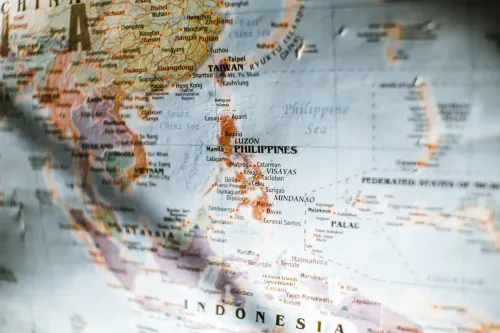
Philippines Geography for Learners: Islands & Language
Philippines geography for Tagalog learners: 7,641 islands, three island groups, and the Southern Luzon heartland where the Tagalog language was born.

Tagalog Verb Focus System Explained (It's Not Active vs. Passive)
The Tagalog verb focus system isn't active vs. passive. Learn actor focus, object focus, and more with clear examples that finally make it click.

Ang, Ng, Sa: The 3 Tagalog Case Markers Explained
Ang, ng, sa are the three Tagalog case markers every noun takes. Learn what each does, the personal forms si/ni/kay, plurals with mga, and clear examples.

Tagalog Pronouns Explained: Complete Chart with Examples
Every Tagalog pronoun explained with clear charts: ang/ng/sa forms, tayo vs kami, ikaw vs ka, politeness markers, and the mistakes beginners make.