dalisdis
dalísdis with stress marks
slope of a hill
Usage Note
Dalisdis refers to the inclined face or side of a hill or mountain. It appears in geographic and rural descriptions, particularly in Tagalog-speaking provinces where hilly terrain is common. Less technical than 'talilis' (gradient), it is the more descriptive, literary choice for hillside imagery in fiction and poetry.
Examples
" Matarik ang dalisdis ng burol. "
Natural Translation
The slope of the hill is steep.
Literal Translation
Steep the slope of-the hill.
" Nagtanim sila ng gulay sa dalisdis ng bundok. "
Natural Translation
They planted vegetables on the hillside.
Literal Translation
Planted they vegetables on-the slope of-the mountain.
" Mula sa tuktok hanggang sa dalisdis ng bundok, tanim na tanim ng palay ang buong lupain ng nayon. "
Natural Translation
From the peak down to the slope of the mountain, the whole land of the village was densely planted with rice.
Literal Translation
From the peak until the slope of-the mountain, planted-very of rice the whole land of-the village.
Take Tagalog with you
The full course, a 12,500-word dictionary, and flashcards that make every word stick — free to start on iOS and Android.




Tagalog builds thousands of words from a few hundred roots.
How Tagalog words workRelated Words
Explore Tagalog by topic
Free guides on grammar, vocabulary, and culture to take you past single-word lookups.
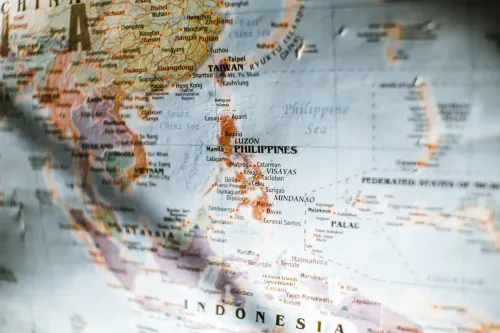
Philippines Geography for Learners: Islands & Language
Philippines geography for Tagalog learners: 7,641 islands, three island groups, and the Southern Luzon heartland where the Tagalog language was born.

Ng vs Nang in Tagalog: The Spelling Rule
Ng vs nang sound identical but spell differently. Use ng to mark nouns (of, the object), and nang for how, when, repetition, and counting time.

Tagalog Pronouns Explained: Complete Chart with Examples
Every Tagalog pronoun explained with clear charts: ang/ng/sa forms, tayo vs kami, ikaw vs ka, politeness markers, and the mistakes beginners make.
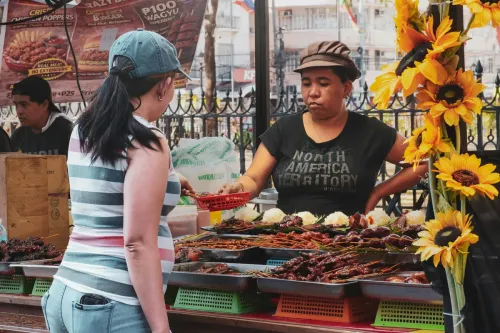
May vs Mayroon vs Meron: Have & There Is
May vs mayroon in Tagalog finally made simple: one rule decides which to use, plus how meron and wala fit the same have and there-is family.