dibersiyon
dibersiyón with stress marks
diversion
Usage Note
Dibersiyon, from Spanish diversión, refers in formal Tagalog to rerouting (such as traffic or a river) as well as to a distraction or tactical feint in military parlance. In everyday speech, libangan is more commonly used for entertainment, making dibersiyon slightly more formal or technical in register.
Examples
" May dibersiyon sa kalsada. "
Natural Translation
There is a diversion on the road.
Literal Translation
There-is diversion on-the road.
" Ang dibersiyon ng trapik ay nagdulot ng abala sa maraming motorista. "
Natural Translation
The traffic diversion caused inconvenience to many motorists.
Literal Translation
The diversion of-the traffic caused inconvenience to many motorists.
" Dahil sa konstruksiyon ng tulay, nagtakda ng dibersiyon ang mga awtoridad upang hindi masyadong bumigat ang trapik. "
Natural Translation
Because of the bridge construction, the authorities set up a diversion so that the traffic would not get too heavy.
Literal Translation
Because of-the construction of-the bridge, set of diversion the authorities so-that not too heavy the traffic.
Take Tagalog with you
The full course, a 12,500-word dictionary, and flashcards that make every word stick — free to start on iOS and Android.




Tagalog builds thousands of words from a few hundred roots.
How Tagalog words workRelated Words
Explore Tagalog by topic
Free guides on grammar, vocabulary, and culture to take you past single-word lookups.

Tagalog Time Expressions: Past, Present & Future Guide
Tagalog has no tenses — it uses aspect. Learn time words, days of the week, clock time, and the aspect system, with vocabulary tables and cultural notes.

Tagalog Slang Guide: 20 Words You'll Hear on TikTok
Tagalog slang explained: lodi, petmalu, werpa, astig, chika and more. Decode Filipino TikTok comments, group chats, and pop culture with this practical guide.
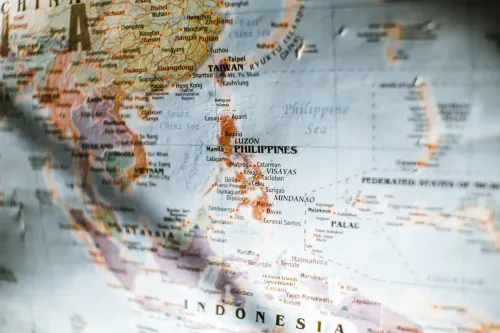
Philippines Geography for Learners: Islands & Language
Philippines geography for Tagalog learners: 7,641 islands, three island groups, and the Southern Luzon heartland where the Tagalog language was born.

Is Tagalog Hard to Learn? An Honest Answer
Tagalog takes around 1,100 hours to reach professional proficiency. Here is what is easy, what is hard, and what to expect at 3, 6, and 12 months.