From root: dumi
Usage Note
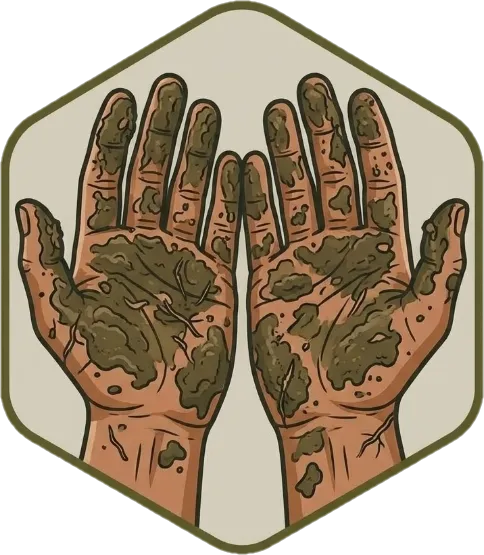
Madumi is the standard adjective for physical uncleanliness, derived from dumi. It applies to surfaces, clothing, hands, and environments. The word can also carry a moral or figurative register, describing corrupt dealings or obscene content, though malaswa is more specific for the latter.
Examples
" Madumi ang kamay mo. "
Natural Translation
Your hands are dirty.
Literal Translation
Dirty the hands your.
" Huwag kang humawak sa madumi na pader. "
Natural Translation
Don't touch that dirty wall.
Literal Translation
Don't you touch on dirty that wall.
" Huwag mong isuot ang damit na iyon dahil madumi pa at hindi pa nalalabhan. "
Natural Translation
Don't wear that shirt because it's still dirty and hasn't been washed yet.
Literal Translation
Don't you wear the shirt that because dirty still and not yet been-washed.
Take Tagalog with you
The full course, a 12,500-word dictionary, and flashcards that make every word stick — free to start on iOS and Android.




Tagalog builds thousands of words from a few hundred roots.
How Tagalog words workWord family
dumi has 9 related forms built from the same root.
Related Words
Explore Tagalog by topic
Free guides on grammar, vocabulary, and culture to take you past single-word lookups.

Ng vs Nang in Tagalog: The Spelling Rule
Ng vs nang sound identical but spell differently. Use ng to mark nouns (of, the object), and nang for how, when, repetition, and counting time.

How to Say "I Love You" in Tagalog: Phrases & Meaning
Learn how to say I love you in Tagalog. Mahal kita, Iniibig kita, and Filipino terms of endearment for partners, family, and friends — with cultural notes.

Tagalog Slang Guide: 20 Words You'll Hear on TikTok
Tagalog slang explained: lodi, petmalu, werpa, astig, chika and more. Decode Filipino TikTok comments, group chats, and pop culture with this practical guide.

Tagalog Word Order: Sentence Structure Made Simple
Why Tagalog puts the verb first, and how ang, ng, and sa markers work. A clear guide to VSO word order, forming questions, and negation.