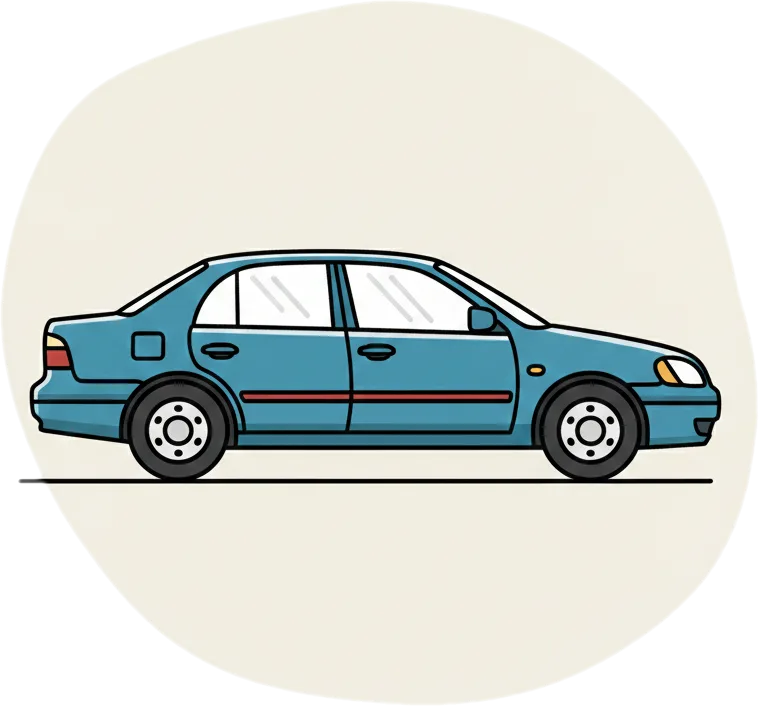
From root: kotse
Conjugations
Past (Completed)
nagkotse
nag-KOT-se
used a car
Present (Incomplete)
nagkokotse
nag-ko-KOT-se
using a car
Future (Contemplated)
magkokotse
mag-ko-KOT-se
will use a car
Usage Note
Magkotse is used when opting to travel by car rather than taking public transportation like a jeepney or bus. It implies the act of using or driving a private vehicle for a trip.
Examples
" Magkotse na lang tayo bukas. "
Natural Translation
Let's just take the car tomorrow.
Literal Translation
Use-car just we tomorrow.
" Mas komportable magkotse tuwing umuulan. "
Natural Translation
It is more comfortable to use a car whenever it rains.
Literal Translation
More comfortable to-use-car whenever raining.
" Dahil malayo ang punta natin at marami tayong dala, mas praktikal na magkotse kaysa sumakay ng bus. "
Natural Translation
Since our destination is far and we have a lot to carry, it is more practical to take the car than to ride the bus.
Literal Translation
Because far the destination our and many we carry, more practical to-use-car than ride of bus.
Take Tagalog with you
The full course, a 12,500-word dictionary, and flashcards that make every word stick — free to start on iOS and Android.




Tagalog builds thousands of words from a few hundred roots.
How Tagalog words workWord family
kotse has 6 related forms built from the same root.
Related Words
Explore Tagalog by topic
Free guides on grammar, vocabulary, and culture to take you past single-word lookups.
Tagalog Root Words: Learn a Few Hundred, Understand Thousands
Tagalog root words unlock vocabulary fast: learn a few hundred and recognize thousands. Real word families, examples, and a practical study strategy.

Ng vs Nang in Tagalog: The Spelling Rule
Ng vs nang sound identical but spell differently. Use ng to mark nouns (of, the object), and nang for how, when, repetition, and counting time.

Tagalog Pronouns Explained: Complete Chart with Examples
Every Tagalog pronoun explained with clear charts: ang/ng/sa forms, tayo vs kami, ikaw vs ka, politeness markers, and the mistakes beginners make.

Tagalog Greetings: How to Say Hello, Goodbye & Po/Opo
Master Tagalog greetings with pronunciation: kumusta, magandang umaga, po and opo polite forms, time-of-day phrases, and the mano po tradition.