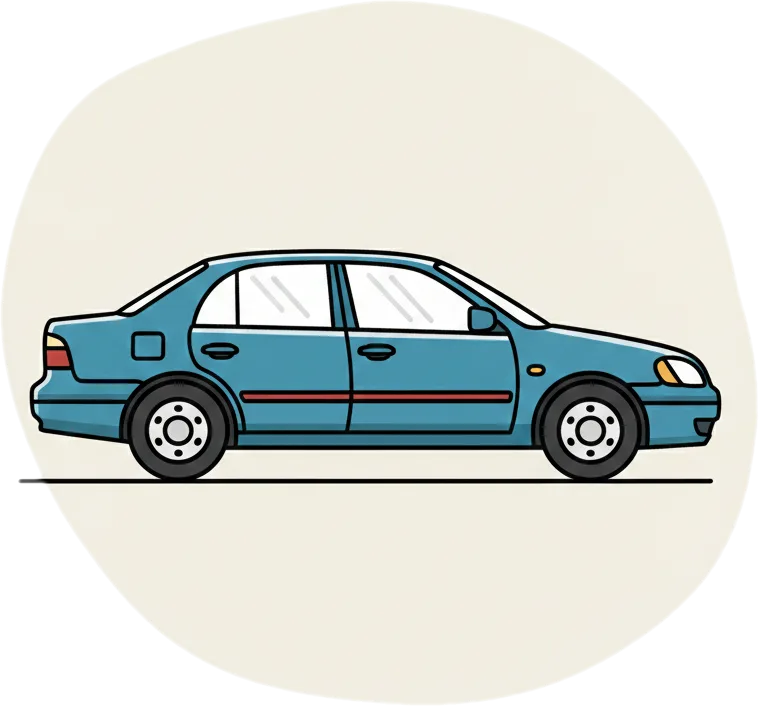
From root: kotse
Usage Note
Nakakotse describes a person currently using or traveling inside a car. It is used in sentences like Nakakotse siya papuntang trabaho, meaning He went to work by car.
Examples
" Nakakotse ako papunta dito. "
Natural Translation
I came here by car.
Literal Translation
By-car I going here.
" Nakatakotse siya kaya hindi siya nabasa ng ulan. "
Natural Translation
He was in a car so he didn't get wet in the rain.
Literal Translation
In-a-car he so not he got-wet by rain.
" Mabuti na lang at nakakotse kami kanina, kung hindi ay tiyak na nabasa kami sa biglang pagbuhos ng malakas na ulan. "
Natural Translation
It's a good thing we were in a car earlier, otherwise we surely would have gotten soaked in the sudden downpour of heavy rain.
Literal Translation
Good just that in-a-car we earlier, if not then sure that got-wet we in sudden pouring of strong rain.
Take Tagalog with you
The full course, a 12,500-word dictionary, and flashcards that make every word stick — free to start on iOS and Android.




Tagalog builds thousands of words from a few hundred roots.
How Tagalog words workWord family
kotse has 6 related forms built from the same root.
Related Words
Explore Tagalog by topic
Free guides on grammar, vocabulary, and culture to take you past single-word lookups.

Tagalog Word Order: Sentence Structure Made Simple
Why Tagalog puts the verb first, and how ang, ng, and sa markers work. A clear guide to VSO word order, forming questions, and negation.

How to Say Sorry in Tagalog: Patawad vs Pasensya
How to say sorry in Tagalog: patawad, pasensya na, and paumanhin compared on a simple severity-and-formality ladder so you pick the right word every time.

Tagalog vs Filipino: What's the Difference & Which to Learn
Tagalog and Filipino aren't the same language — but they overlap almost completely. Here's the real difference and which one you should actually learn.

Is Tagalog Hard to Learn? An Honest Answer
Tagalog takes around 1,100 hours to reach professional proficiency. Here is what is easy, what is hard, and what to expect at 3, 6, and 12 months.