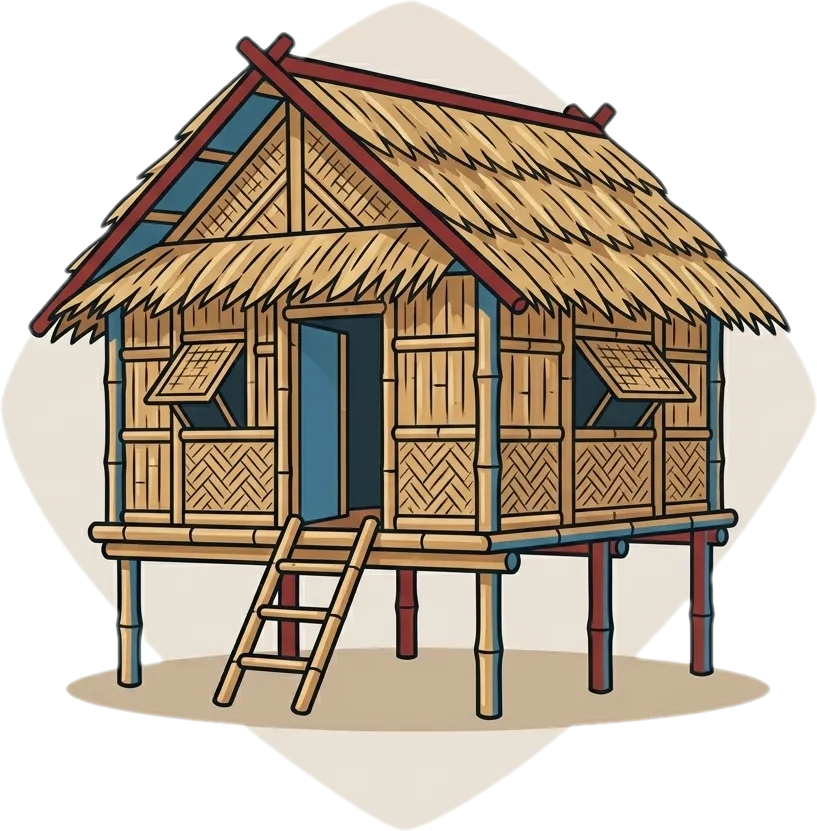
From root: kubo
Usage Note
Kubo-kubo refers to a playhouse or a miniature version of a native hut often built for children. This term is also used for very small temporary shelters.
Examples
" May kubo-kubo sa bukid. "
Natural Translation
There's a small hut in the field.
Literal Translation
There-is small-hut in field.
" Maraming kubo-kubo sa tabi ng dagat. "
Natural Translation
There are many small huts by the seaside.
Literal Translation
Many small-huts in side of sea.
" Gumawa ang lolo ng maliit na kubo-kubo sa likod-bahay para may laruan ang mga apo niya tuwing bakasyon. "
Natural Translation
Grandpa built a little playhouse in the backyard so his grandchildren would have something to play with every vacation.
Literal Translation
Made the grandpa of small that small-hut in backyard so there-is plaything the grandchildren his every vacation.
Take Tagalog with you
The full course, a 12,500-word dictionary, and flashcards that make every word stick — free to start on iOS and Android.




Tagalog builds thousands of words from a few hundred roots.
How Tagalog words workWord family
kubo has 1 related form built from the same root.
Related Words
Explore Tagalog by topic
Free guides on grammar, vocabulary, and culture to take you past single-word lookups.
How to Say Sorry in Tagalog: Patawad vs Pasensya
How to say sorry in Tagalog: patawad, pasensya na, and paumanhin compared on a simple severity-and-formality ladder so you pick the right word every time.

How to Say "I Love You" in Tagalog: Phrases & Meaning
Learn how to say I love you in Tagalog. Mahal kita, Iniibig kita, and Filipino terms of endearment for partners, family, and friends — with cultural notes.

Ang, Ng, Sa: The 3 Tagalog Case Markers Explained
Ang, ng, sa are the three Tagalog case markers every noun takes. Learn what each does, the personal forms si/ni/kay, plurals with mga, and clear examples.
Philippines Geography for Learners: Islands & Language
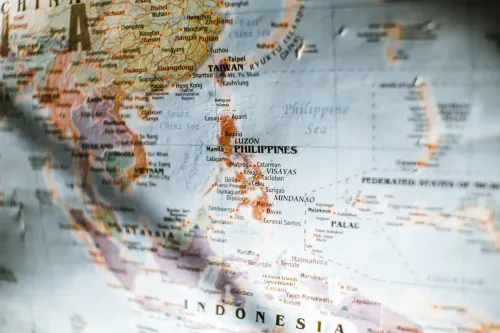
Philippines geography for Tagalog learners: 7,641 islands, three island groups, and the Southern Luzon heartland where the Tagalog language was born.