From root: parke
Conjugations
Past (Completed)
ipinarke
i-pi-NAR-ke
parked
Present (Incomplete)
ipinaparke
i-pi-na-PAR-ke
parking
Future (Contemplated)
ipaparke
i-pa-PAR-ke
will park
Usage Note
Iparke is used when focusing on the object being parked, such as a vehicle, and is commonly used in conversational Taglish as a direct alternative to the more formal 'iparada'. It is particularly useful in urban settings when giving instructions to a driver or a parking attendant.
Examples
" Iparke mo ang kotse dito. "
Natural Translation
Park the car here.
Literal Translation
Park you the car here.
" Mahirap iparke ang sasakyan dito. "
Natural Translation
It is hard to park the vehicle here.
Literal Translation
Hard to park the vehicle here.
" Mahirap iparke ang sasakyan sa makitid na kalye lalo na kung maraming nakaharang na motorsiklo. "
Natural Translation
It's hard to park the vehicle on the narrow street, especially when there are many motorcycles blocking the way.
Literal Translation
Hard park the vehicle on narrow street especially if many blocking motorcycle.
Take Tagalog with you
The full course, a 12,500-word dictionary, and flashcards that make every word stick — free to start on iOS and Android.




Tagalog builds thousands of words from a few hundred roots.
How Tagalog words workWord family
parke has 5 related forms built from the same root.
Related Words
Explore Tagalog by topic
Free guides on grammar, vocabulary, and culture to take you past single-word lookups.
How to Say Sorry in Tagalog: Patawad vs Pasensya
How to say sorry in Tagalog: patawad, pasensya na, and paumanhin compared on a simple severity-and-formality ladder so you pick the right word every time.

Tagalog Greetings: How to Say Hello, Goodbye & Po/Opo
Master Tagalog greetings with pronunciation: kumusta, magandang umaga, po and opo polite forms, time-of-day phrases, and the mano po tradition.
Tagalog Root Words: Learn a Few Hundred, Understand Thousands
Tagalog root words unlock vocabulary fast: learn a few hundred and recognize thousands. Real word families, examples, and a practical study strategy.
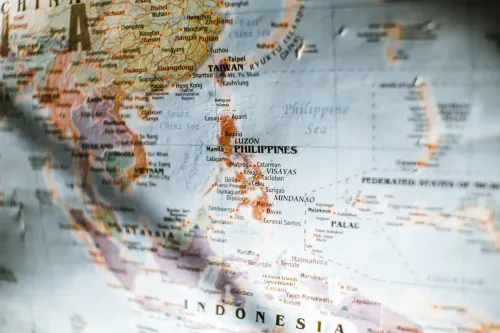
Philippines Geography for Learners: Islands & Language
Philippines geography for Tagalog learners: 7,641 islands, three island groups, and the Southern Luzon heartland where the Tagalog language was born.