papasukin
to let (someone) in / to admit
From root: pasok
Conjugations
Past (Completed)
pinapasok
pi-na-PA-sok
let/allowed in
Present (Incomplete)
pinapapasok
pi-na-pa-PA-sok
letting/allowing in
Future (Contemplated)
papasukin
pa-pa-su-KIN
will let/allow in
Usage Note
Papasukin is the standard way to express giving someone permission to enter a room or building, often used by guards or hosts.
Examples
" Papasukin mo ang bisita. "
Natural Translation
Let the visitor in.
Literal Translation
Let-in you the visitor.
" Oras na para papasukin ang mga panauhin. "
Natural Translation
It is time to let the guests in.
Literal Translation
Time now for let-in the plural guest.
" Hindi papasukin ng guwardiya ang sinumang walang dalang ID kahit kakilala pa nila ito. "
Natural Translation
The guard will not let anyone in who is not carrying an ID, even if they know the person.
Literal Translation
Not let-in of guard the whoever without bringing ID even acquaintance still they this.
Take Tagalog with you
The full course, a 12,500-word dictionary, and flashcards that make every word stick — free to start on iOS and Android.




Tagalog builds thousands of words from a few hundred roots.
How Tagalog words workWord family
pasok has 5 related forms built from the same root.
Related Words
Explore Tagalog by topic
Free guides on grammar, vocabulary, and culture to take you past single-word lookups.
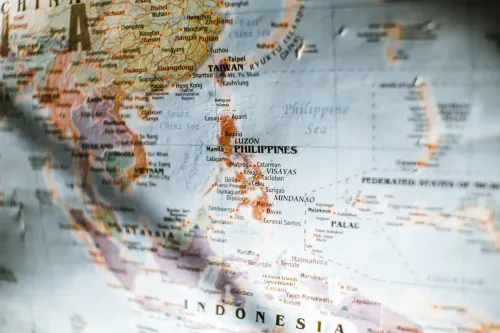
Philippines Geography for Learners: Islands & Language
Philippines geography for Tagalog learners: 7,641 islands, three island groups, and the Southern Luzon heartland where the Tagalog language was born.

Tagalog Time Expressions: Past, Present & Future Guide
Tagalog has no tenses — it uses aspect. Learn time words, days of the week, clock time, and the aspect system, with vocabulary tables and cultural notes.
Po and Opo in Tagalog: Where to Put Them Right
Po and opo confuse learners — but placement follows one rule. Where po goes in a sentence, why it's opo not 'oo po', and the pronoun shift to learn.

Tagalog Greetings: How to Say Hello, Goodbye & Po/Opo
Master Tagalog greetings with pronunciation: kumusta, magandang umaga, po and opo polite forms, time-of-day phrases, and the mano po tradition.