From root: plastik
Conjugations
Past (Completed)
ipinalastik
i-pi-na-las-TIK
put in plastic
Present (Incomplete)
ipinaplastik
i-pi-na-plas-TIK
putting in plastic
Future (Contemplated)
ipaplastik
i-pa-plas-TIK
will put in plastic
Usage Note
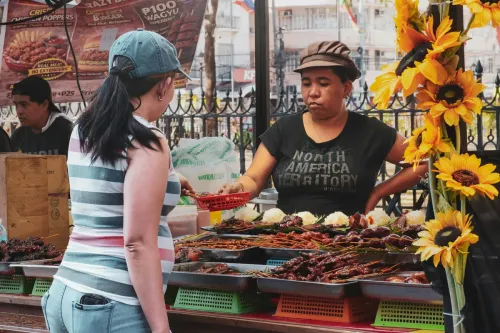
Iplastik is commonly used in retail and market settings to request that an item be placed inside a plastic bag. It is frequently heard when buying street food or groceries to facilitate easier carrying.
Examples
" Pakiusap, iplastik mo ito. "
Natural Translation
Please put this in plastic.
Literal Translation
Please, put-in-plastic you this.
" Kailangan mong iplastik ang mga laruan. "
Natural Translation
You need to put the toys in plastic.
Literal Translation
Need you put-in-plastic the plural toys.
" Bago mo ilagay sa lalagyan, mas mabuting iplastik muna ang tinapay para hindi ito agad matuyo. "
Natural Translation
Before you put it in the container, it is better to put the bread in plastic first so it doesn't dry out quickly.
Literal Translation
Before you put in container, more good put-in-plastic first the bread so not it immediately dries.
Take Tagalog with you
The full course, a 12,500-word dictionary, and flashcards that make every word stick — free to start on iOS and Android.




Tagalog builds thousands of words from a few hundred roots.
How Tagalog words workWord family
plastik has 8 related forms built from the same root.
Related Words
Explore Tagalog by topic
Free guides on grammar, vocabulary, and culture to take you past single-word lookups.

Magkano: How to Ask "How Much" in Tagalog
Magkano means how much in Tagalog. Learn to ask a price, tell it apart from ilan and gaano, sound polite with po, and haggle at the palengke.

Languages of the Philippines: Tagalog, Cebuano, and More
Languages of the Philippines: one national language (Filipino) plus 180+ regional languages. Here's who speaks what, where, and why it matters to you.
May vs Mayroon vs Meron: Have & There Is
May vs mayroon in Tagalog finally made simple: one rule decides which to use, plus how meron and wala fit the same have and there-is family.

Seasons in the Philippines: A Tagalog Guide
The Philippines has two seasons, not four. Learn tag-araw, tag-ulan, and taglamig, the generative tag- prefix, and the weather vocabulary to match.