magronda
magrónda with stress marks
to patrol
From root: ronda
Conjugations
Past (Completed)
nagronda
nag-RON-da
patrolled
Present (Incomplete)
nagroronda
nag-ro-RON-da
is patrolling
Future (Contemplated)
magroronda
mag-ro-RON-da
will patrol
Usage Note
Magronda is the actor-focus mag- form of ronda, from Spanish ronda, and is the standard term for foot patrols by police, barangay tanod, and private security guards. Deeply embedded in barangay governance culture, where nightly tanod patrols are a familiar institution; pair with rondahin when the area being covered is the topic.
Examples
" Magronda ang mga tanod mamayang gabi. "
Natural Translation
The guards will patrol tonight.
Literal Translation
Will-patrol the guards later night.
" Tungkulin ng mga tanod ang magronda gabi-gabi. "
Natural Translation
It is the guards' duty to patrol every night.
Literal Translation
Duty of guards the to patrol every night.
" Tuwing gabi, nagroronda ang mga tanod sa buong baryo upang masiguro na ligtas ang bawat tahanan. "
Natural Translation
Every night, the guards patrol the whole village to make sure that every home is safe.
Literal Translation
Every night, are-patrolling the guards in whole village so to-ensure that safe the each home.
Take Tagalog with you
The full course, a 12,500-word dictionary, and flashcards that make every word stick — free to start on iOS and Android.




Tagalog builds thousands of words from a few hundred roots.
How Tagalog words workWord family
ronda has 1 related form built from the same root.
Related Words
Explore Tagalog by topic
Free guides on grammar, vocabulary, and culture to take you past single-word lookups.

Tagalog Verb Focus System Explained (It's Not Active vs. Passive)
The Tagalog verb focus system isn't active vs. passive. Learn actor focus, object focus, and more with clear examples that finally make it click.
How to Say Sorry in Tagalog: Patawad vs Pasensya
How to say sorry in Tagalog: patawad, pasensya na, and paumanhin compared on a simple severity-and-formality ladder so you pick the right word every time.
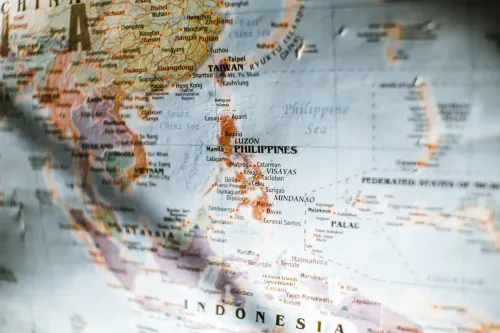
Philippines Geography for Learners: Islands & Language
Philippines geography for Tagalog learners: 7,641 islands, three island groups, and the Southern Luzon heartland where the Tagalog language was born.

Ang, Ng, Sa: The 3 Tagalog Case Markers Explained
Ang, ng, sa are the three Tagalog case markers every noun takes. Learn what each does, the personal forms si/ni/kay, plurals with mga, and clear examples.