magsemento
magseménto with stress marks
to cement
From root: semento
Conjugations
Past (Completed)
nagsemento
nag-se-MEN-to
cemented
Present (Incomplete)
nagsesemento
nag-se-se-MEN-to
is cementing
Future (Contemplated)
magsesemento
mag-se-se-MEN-to
will cement
Usage Note
Magsemento is the actor-focus mag- form of semento, a Spanish loanword. Used for laying or applying concrete in construction and home repair — cementing a floor, patching a wall, paving a path. The object-focus partner is sementuhin when the surface being cemented is the focus.
Examples
" Magsesemento sila ng sahig bukas. "
Natural Translation
They will cement the floor tomorrow.
Literal Translation
Will-cement they of floor tomorrow.
" Planong magsemento ng kalsada ng mga manggagawa bukas. "
Natural Translation
The workers plan to cement the road tomorrow.
Literal Translation
Plan to-cement of road of plural worker tomorrow.
" Bago dumating ang tag-ulan, nagmamadali ang mga manggagawa na magsemento ng daan upang hindi ito maging putikan. "
Natural Translation
Before the rainy season arrives, the workers are hurrying to cement the path so it won't turn into mud.
Literal Translation
Before arrive the rainy-season, hurrying the workers to cement of path so-that not it become muddy.
Take Tagalog with you
The full course, a 12,500-word dictionary, and flashcards that make every word stick — free to start on iOS and Android.




Tagalog builds thousands of words from a few hundred roots.
How Tagalog words workWord family
semento has 1 related form built from the same root.
Related Words
Explore Tagalog by topic
Free guides on grammar, vocabulary, and culture to take you past single-word lookups.

Tagalog vs Filipino: What's the Difference & Which to Learn
Tagalog and Filipino aren't the same language — but they overlap almost completely. Here's the real difference and which one you should actually learn.

Na vs -ng in Tagalog: The Linker Rule Made Simple
When do you use na vs -ng in Tagalog? One simple rule, with clear examples, memory tips, and common mistakes explained for English-speaking beginners.
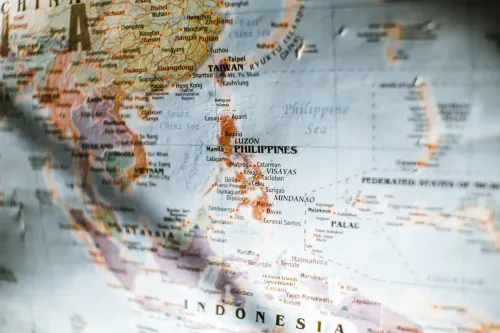
Philippines Geography for Learners: Islands & Language
Philippines geography for Tagalog learners: 7,641 islands, three island groups, and the Southern Luzon heartland where the Tagalog language was born.

Seasons in the Philippines: A Tagalog Guide
The Philippines has two seasons, not four. Learn tag-araw, tag-ulan, and taglamig, the generative tag- prefix, and the weather vocabulary to match.