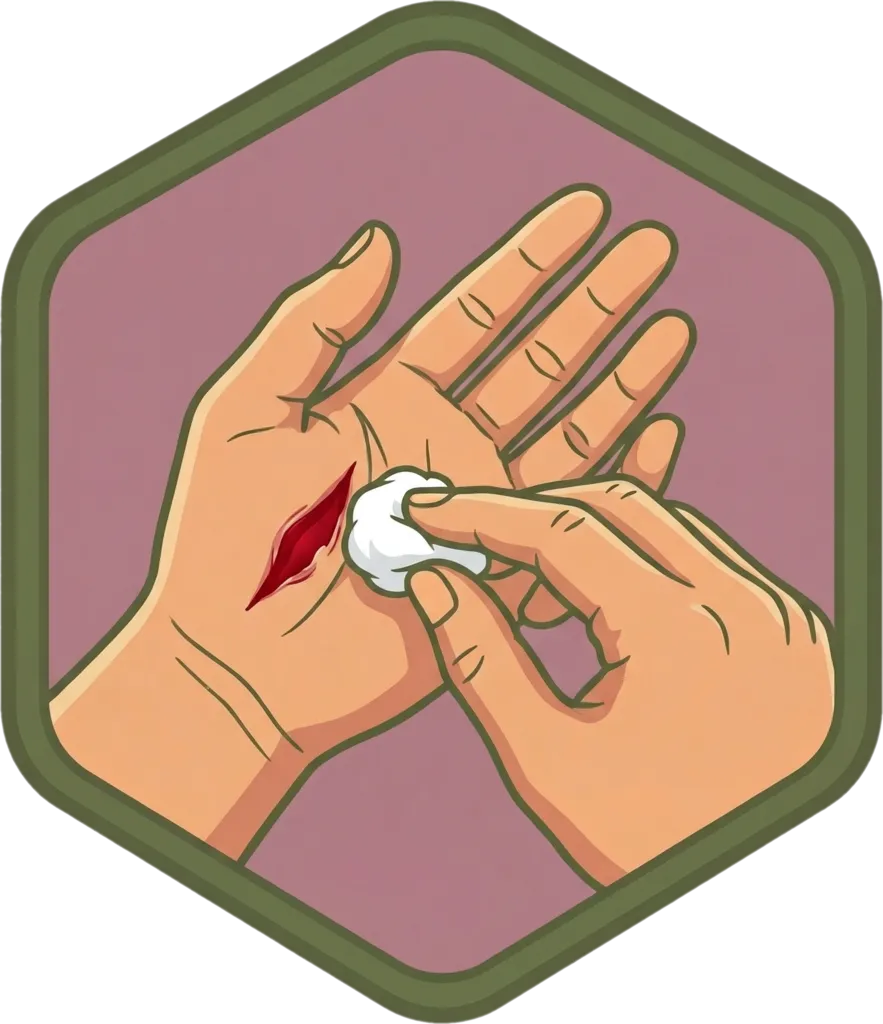
From root: sugat
Conjugations
Past (Completed)
sumugat
su-MU-gat
wounded
Present (Incomplete)
sumusugat
su-mu-SU-gat
wounding
Future (Contemplated)
susugat
su-SU-gat
will wound
Usage Note
Sumugat is used when an action or object causes a physical wound or emotional injury. It is frequently used figuratively to describe words or experiences that are deeply painful or 'cutting' to the heart.
Examples
" Sumugat ang bubog sa paa ko. "
Natural Translation
The broken glass wounded my foot.
Literal Translation
Wounded the broken-glass on foot my.
" Maaaring sumugat ang kutsilyo kung hindi maingat. "
Natural Translation
The knife might wound if not careful.
Literal Translation
Possible wound the knife if not careful.
" Maaaring sumugat ang mga matatalim na salita kahit higit pa kaysa sa anumang kutsilyo kapag galit ang nagsasalita. "
Natural Translation
Sharp words can wound even more than any knife when the one speaking is angry.
Literal Translation
Can wound the sharp words even more than to any knife when angry the speaking.
Take Tagalog with you
The full course, a 12,500-word dictionary, and flashcards that make every word stick — free to start on iOS and Android.




Tagalog builds thousands of words from a few hundred roots.
How Tagalog words workWord family
sugat has 5 related forms built from the same root.
Related Words
Explore Tagalog by topic
Free guides on grammar, vocabulary, and culture to take you past single-word lookups.

Spaced Repetition for Tagalog: How Flashcards Make Words Stick
Cramming Tagalog vocabulary fails. See how spaced repetition — the science behind smart flashcards — makes words stick for the long term.

Tagalog Affixes Explained: A Beginner's Guide to Word Building
Tagalog affixes turn one root word into dozens of meanings. Learn prefixes, infixes, suffixes, and circumfixes with clear examples for beginners.

Tagalog Time Expressions: Past, Present & Future Guide
Tagalog has no tenses — it uses aspect. Learn time words, days of the week, clock time, and the aspect system, with vocabulary tables and cultural notes.

Po and Opo in Tagalog: Where to Put Them Right
Po and opo confuse learners — but placement follows one rule. Where po goes in a sentence, why it's opo not 'oo po', and the pronoun shift to learn.