taklab
takláb with stress marks
a granary
Usage Note
Taklab refers to a traditional storage structure for grain — particularly rice — built in rural farming communities. It reflects the agricultural heritage of the Philippines where proper grain storage was essential to a family's survival between harvests. The word is now largely regional and archaic in urban usage.
Examples
" Puno ng palay ang taklab. "
Natural Translation
The granary is full of rice.
Literal Translation
Full of rice the granary.
" Puno ng palay ang taklab nila. "
Natural Translation
Their granary is full of rice.
Literal Translation
Full of rice the granary their.
" Tuwing tag-ani, pinupuno ng magsasaka ang kanyang taklab ng palay upang may makain ang pamilya hanggang sa susunod na anihan. "
Natural Translation
Every harvest season, the farmer fills his granary with rice so that the family has food to eat until the next harvest.
Literal Translation
Every harvest-season, fills the farmer the his granary of rice so-that has food the family until the next harvest.
Take Tagalog with you
The full course, a 12,500-word dictionary, and flashcards that make every word stick — free to start on iOS and Android.




Tagalog builds thousands of words from a few hundred roots.
How Tagalog words workRelated Words
Explore Tagalog by topic
Free guides on grammar, vocabulary, and culture to take you past single-word lookups.

Languages of the Philippines: Tagalog, Cebuano, and More
Languages of the Philippines: one national language (Filipino) plus 180+ regional languages. Here's who speaks what, where, and why it matters to you.

Tagalog Greetings: How to Say Hello, Goodbye & Po/Opo
Master Tagalog greetings with pronunciation: kumusta, magandang umaga, po and opo polite forms, time-of-day phrases, and the mano po tradition.
Tagalog Root Words: Learn a Few Hundred, Understand Thousands
Tagalog root words unlock vocabulary fast: learn a few hundred and recognize thousands. Real word families, examples, and a practical study strategy.
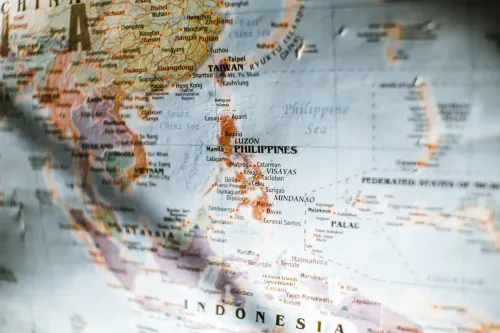
Philippines Geography for Learners: Islands & Language
Philippines geography for Tagalog learners: 7,641 islands, three island groups, and the Southern Luzon heartland where the Tagalog language was born.