From root: tubo
Usage Note
Katutubo refers to the original or indigenous inhabitants of a place. It is used to describe people, languages, or traditions native to the land.
Examples
" Katutubo siya sa lugar na ito. "
Natural Translation
He is native to this place.
Literal Translation
Native he in place that this.
" Ang mga katutubo ay may sariling kultura. "
Natural Translation
The indigenous people have their own culture.
Literal Translation
The natives have own culture.
" Marami pang katutubong tribo sa kabundukan na nagpapanatili ng kanilang sariling wika at sinaunang tradisyon. "
Natural Translation
There are still many indigenous tribes in the mountains who preserve their own language and ancient traditions.
Literal Translation
Many still native tribe in mountains that preserving of their own language and ancient tradition.
Take Tagalog with you
The full course, a 12,500-word dictionary, and flashcards that make every word stick — free to start on iOS and Android.




Tagalog builds thousands of words from a few hundred roots.
How Tagalog words workWord family
tubo has 6 related forms built from the same root.
Related Words
Explore Tagalog by topic
Free guides on grammar, vocabulary, and culture to take you past single-word lookups.

Ng vs Nang in Tagalog: The Spelling Rule
Ng vs nang sound identical but spell differently. Use ng to mark nouns (of, the object), and nang for how, when, repetition, and counting time.
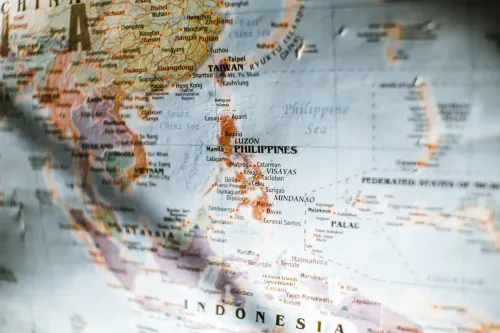
Philippines Geography for Learners: Islands & Language
Philippines geography for Tagalog learners: 7,641 islands, three island groups, and the Southern Luzon heartland where the Tagalog language was born.

Is Tagalog Hard to Learn? An Honest Answer
Tagalog takes around 1,100 hours to reach professional proficiency. Here is what is easy, what is hard, and what to expect at 3, 6, and 12 months.

Seasons in the Philippines: A Tagalog Guide
The Philippines has two seasons, not four. Learn tag-araw, tag-ulan, and taglamig, the generative tag- prefix, and the weather vocabulary to match.