
From root: ubo
Conjugations
Past (Completed)
iniubo
i-ni-U-bo
coughed something out
Present (Incomplete)
iniuubo
i-ni-u-U-bo
coughing something out
Future (Contemplated)
iuubo
i-u-U-bo
will cough something out
Usage Note
Iubo is used when focusing on a specific object, such as phlegm or a foreign particle, that needs to be expelled from the throat or lungs. It is commonly used in medical contexts or when instructing someone to clear their airway through coughing.
Examples
" Iubo mo ang plema. "
Natural Translation
Cough out the phlegm.
Literal Translation
Cough-out you the phlegm.
" Mahirap iubo ang bara sa lalamunan. "
Natural Translation
It is hard to cough the blockage out of the throat.
Literal Translation
Hard cough-out the blockage in throat.
" Sabi ng doktor, kailangan niyang iubo ang plema para luminis ang kanyang baga. "
Natural Translation
The doctor said he needs to cough out the phlegm so that his lungs clear up.
Literal Translation
Said of doctor, need he cough-out the phlegm so clear the his lung.
Take Tagalog with you
The full course, a 12,500-word dictionary, and flashcards that make every word stick — free to start on iOS and Android.




Tagalog builds thousands of words from a few hundred roots.
How Tagalog words workWord family
ubo has 6 related forms built from the same root.
Related Words
Explore Tagalog by topic
Free guides on grammar, vocabulary, and culture to take you past single-word lookups.

Tagalog vs Filipino: What's the Difference & Which to Learn
Tagalog and Filipino aren't the same language — but they overlap almost completely. Here's the real difference and which one you should actually learn.
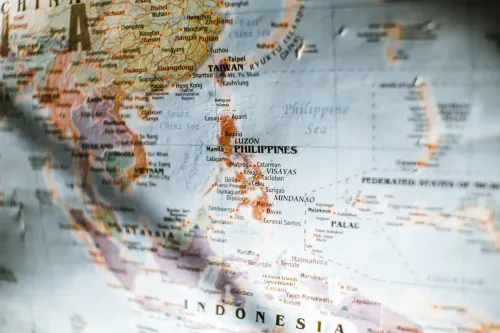
Philippines Geography for Learners: Islands & Language
Philippines geography for Tagalog learners: 7,641 islands, three island groups, and the Southern Luzon heartland where the Tagalog language was born.

Spaced Repetition for Tagalog: How Flashcards Make Words Stick
Cramming Tagalog vocabulary fails. See how spaced repetition — the science behind smart flashcards — makes words stick for the long term.

Tagalog Greetings: How to Say Hello, Goodbye & Po/Opo
Master Tagalog greetings with pronunciation: kumusta, magandang umaga, po and opo polite forms, time-of-day phrases, and the mano po tradition.