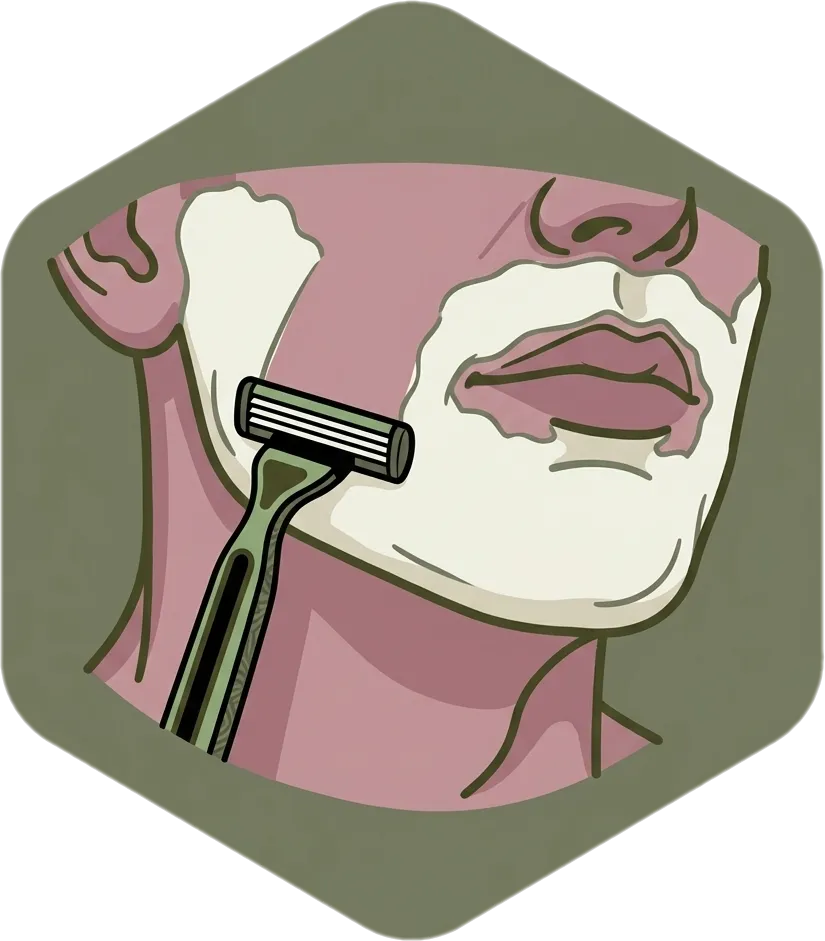
From root: ahit
Conjugations
Past (Completed)
nag-ahit
nag-A-hit
shaved
Present (Incomplete)
nag-aahit
nag-a-A-hit
shaving
Future (Contemplated)
mag-aahit
mag-a-A-hit
will shave
Usage Note
Mag-ahit is used when the actor shaves themselves, most commonly referring to facial hair or legs. As a mag- verb, it emphasizes the person performing the action rather than the object being shaved.
Examples
" Mag-ahit ka na. "
Natural Translation
Go shave now.
Literal Translation
Shave you now.
" Kailangan ko nang mag-ahit bukas. "
Natural Translation
I need to shave tomorrow.
Literal Translation
Need I already to-shave tomorrow.
" Bago siya pumunta sa interbyu, nag-ahit muna siya para magmukhang malinis at presentable. "
Natural Translation
Before he went to the interview, he shaved first so he would look clean and presentable.
Literal Translation
Before he go to-the interview, shaved first he so look clean and presentable.
Take Tagalog with you
The full course, a 12,500-word dictionary, and flashcards that make every word stick — free to start on iOS and Android.




Tagalog builds thousands of words from a few hundred roots.
How Tagalog words workWord family
ahit has 6 related forms built from the same root.
Related Words
Explore Tagalog by topic
Free guides on grammar, vocabulary, and culture to take you past single-word lookups.

Tagalog Affixes Explained: A Beginner's Guide to Word Building
Tagalog affixes turn one root word into dozens of meanings. Learn prefixes, infixes, suffixes, and circumfixes with clear examples for beginners.

Tagalog Word Order: Sentence Structure Made Simple
Why Tagalog puts the verb first, and how ang, ng, and sa markers work. A clear guide to VSO word order, forming questions, and negation.

How Long Does It Take to Learn Tagalog?
Survival Tagalog takes ~3-4 weeks and comfortable conversation 6-12 months. FSI's 1,100 hours is the professional bar, not the talking-to-family bar.

Tagalog Verb Focus System Explained (It's Not Active vs. Passive)
The Tagalog verb focus system isn't active vs. passive. Learn actor focus, object focus, and more with clear examples that finally make it click.