From root: ani
Usage Note
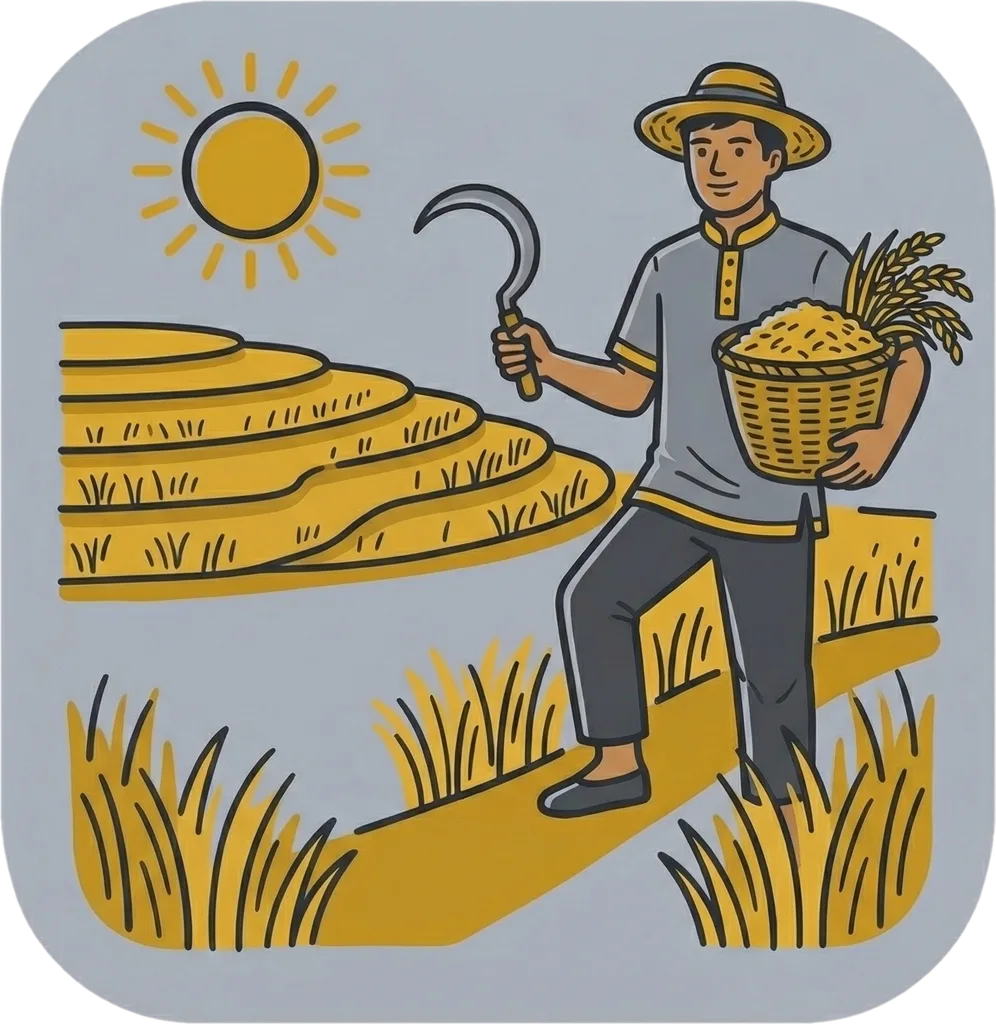
Tag-ani refers to the time of year when farmers gather their crops. This period is often a time of celebration in rural provinces.
Examples
" Masaya ang tag-ani sa amin. "
Natural Translation
Harvest season is happy where we are.
Literal Translation
Happy the harvest-season at ours.
" Dumating na ang panahon ng tag-ani. "
Natural Translation
The harvest season has arrived.
Literal Translation
Arrived now the time of harvest season.
" Tuwing tag-ani, nagtitipon ang buong baryo upang magdiwang at magpasalamat sa masaganang biyayang dulot ng lupa. "
Natural Translation
During every harvest season, the whole village gathers to celebrate and give thanks for the abundant blessings brought by the land.
Literal Translation
Every harvest-season, gathers the whole village to celebrate and give-thanks for the abundant blessing brought by the land.
Take Tagalog with you
The full course, a 12,500-word dictionary, and flashcards that make every word stick — free to start on iOS and Android.




Tagalog builds thousands of words from a few hundred roots.
How Tagalog words workWord family
ani has 9 related forms built from the same root.
Related Words
Explore Tagalog by topic
Free guides on grammar, vocabulary, and culture to take you past single-word lookups.

Seasons in the Philippines: A Tagalog Guide
The Philippines has two seasons, not four. Learn tag-araw, tag-ulan, and taglamig, the generative tag- prefix, and the weather vocabulary to match.

Tagalog Verb Conjugation: Aspects Made Simple
Tagalog verb conjugation uses aspects, not tenses. Learn the three aspects with -um- and mag- verbs, one reduplication rule, and clear example tables.
Philippines Geography for Learners: Islands & Language
Philippines geography for Tagalog learners: 7,641 islands, three island groups, and the Southern Luzon heartland where the Tagalog language was born.

Filipino Food: 12 Essential Dishes (With Tagalog Names)
Filipino food, from adobo to halo-halo: learn the Tagalog names, pronunciations, and ingredients behind 12 dishes you'll want to try on your first trip.