Filipino Food: 12 Essential Dishes (With Tagalog Names)
April 13, 2026 • Jun Alldred • 6 minute read
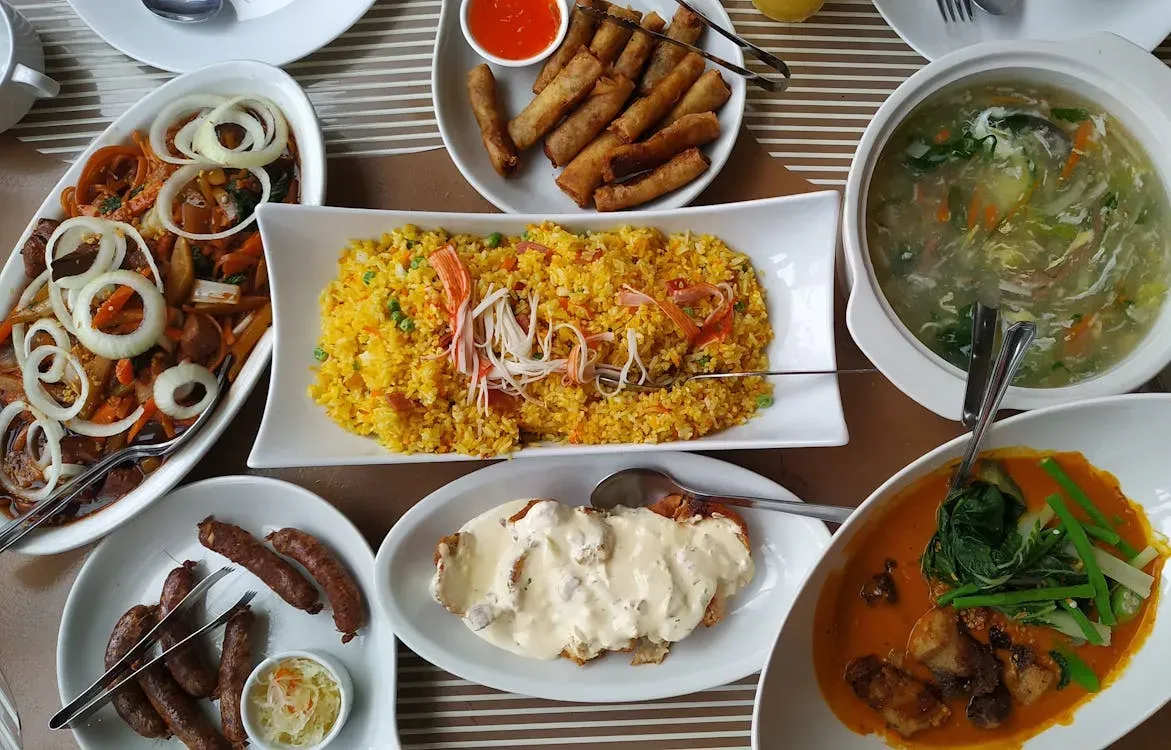
Table of Contents
- The Flavor DNA of Filipino Food
- The Savory-Vinegar Family: Adobo and Friends
- Sinigang and the Sour Soups
- Coconut-Rich: Kare-Kare, Laing, Bicol Express
- Lechon and the Grill
- Pancit, Lumpia, Sisig
- Breakfast: The Silog Family
- Vegetables, Stews, and Sweets
- The Dishes
- The Ingredient Pantry
- Regions and How Filipinos Eat
Filipino food does not have one signature spice the way Thai cooking has lemongrass or Indian cooking has garam masala. What it has is a handful of flavor moves — sour, salty-vinegar, coconut-rich, smoky-roasted — and the same pantry repeated everywhere. Learn those moves and a dozen ulam (main dishes eaten with rice), and almost any menu starts to read.
The Flavor DNA of Filipino Food
Four moves show up everywhere: sour (sinigang, paksiw, kinilaw); savory-vinegar (adobo, paksiw na pata); coconut-rich (laing, bicol express, plus kare-kare, which sits in the same thick-sauce family without actually being coconut-based); and celebration roast (lechon, grilled pork belly, chicken inasal).
Underneath it all sits the “holy trinity” of bawang (garlic), sibuyas (onion), and kamatis (tomato) — the gisa sauté that starts countless dishes. The cuisine skews sweet-salty-sour rather than hot; Bicol is the exception, and elsewhere chili is a garnish, not the point.
The Savory-Vinegar Family: Adobo and Friends
Adobo is chicken or pork braised in vinegar, soy sauce, garlic, bay leaf, and peppercorns — the unofficial national dish. The Spanish name (“adobar,” to marinate) is newer than the technique; vinegar-stewing predates colonization. Every household has its own version, and arguments over sugar, coconut milk, or potatoes are real.
Paksiw is the sour cousin — fish or pork belly in vinegar and aromatics, less soy, more pucker. Kinilaw is Filipino ceviche: raw fish cured in vinegar, ginger, chili, and calamansi, predating Spanish ceviche by centuries.
Sinigang and the Sour Soups
Sinigang is a sour broth simmered with pork, beef, shrimp, or fish and vegetables like kangkong (water spinach) and radish. Many Filipinos rank it above adobo as the true national dish. The souring agent shifts by region — Manila uses sampalok (tamarind); Pampanga reaches for guava; Iloilo uses libas.
Take Tagalog with you
The full course, a 12,500-word dictionary, and flashcards that make every word stick — free to start on iOS and Android.




Coconut-Rich: Kare-Kare, Laing, Bicol Express
Kare-kare is oxtail and vegetables in a thick peanut-and-annatto sauce, served with bagoong (fermented shrimp paste). Its origins are genuinely debated — Kapampangan, pre-colonial Moro elite, Mexican galleon trade, and Indian-sepoy (from Tamil kari) theories have all been argued. Pick none; enjoy the sauce.
Laing is taro leaves slow-cooked in coconut milk with chili, ginger, and shrimp paste — Bicolano, earthy, mildly spicy. Bicol Express is pork belly stewed in coconut milk with long green chilies. Despite the name, it was invented in Malate, Manila in the 1970s by Cely Kalaw, cooked in the Bicolano style and named after the train to Legazpi — Bicol-inspired rather than from Bicol.
Lechon and the Grill
Lechon is whole pig roasted on a bamboo spit over charcoal — the centerpiece of every fiesta and Noche Buena. Cebu-style is stuffed with lemongrass and garlic, skin eaten without sauce; Bourdain called it the best pig in the world. Manila-style is plainer, served with a liver-based sarsa (gravy). Inihaw covers everything grilled — liempo (pork belly), bangus (milkfish), inasal na manok (Ilonggo grilled chicken).
Pancit, Lumpia, Sisig
Pansit is the umbrella term for noodles, from Hokkien pian i sit (“convenient food”), brought by Chinese traders and served at birthdays for long life. Common variants: bihon (thin rice), canton (wheat), palabok (shrimp-annatto sauce). Lumpia splits into lumpiang shanghai (fried, ground pork) and lumpiang sariwa (fresh, crepe-wrapped).
Sisig — chopped pork jowl, ears, and liver sizzled on a hot plate with onions and chili — is Kapampangan. The word first appears in a 1732 dictionary as a green-mango salad; the sizzling pork version was popularized by “Aling Lucing” Cunanan in 1970s Angeles City.
Breakfast: The Silog Family
Silog is sinangag (garlic fried rice) plus itlog (egg) plus a protein, named by portmanteau: tapsilog (cured beef), longsilog (sausage), tocilog (tocino), bangsilog (milkfish). Served with suka (vinegar) for dipping — the default Filipino breakfast, and a great first menu to read.
Vegetables, Stews, and Sweets
Pinakbet is mixed vegetables — eggplant, bitter melon, long beans, okra, squash — sautéed with bagoong. The name is Ilocano for “shrivelled.” Kaldereta is a tomato-based beef or goat stew with liver paste, olives, and peppers, borrowed from Spanish caldereta.
For dessert, halo-halo — literally “mix-mix” — is shaved ice piled with sweet beans, jellies, tropical fruits, leche flan, ube ice cream, and evaporated milk, stirred into chaos before eating. Bibingka is a rice-flour cake baked on banana leaf, topped with salted egg and cheese; it is tied to Simbang Gabi, the dawn Masses covered in our guide to Philippine Christmas traditions. Puto are steamed rice cakes that pair with savory dishes too.
The Dishes
| Tagalog | English | Notes |
|---|---|---|
| Adobo | Braised meat in vinegar + soy | Unofficial national dish |
| Sinigang | Sour tamarind soup | Many Filipinos' true favorite |
| Kare-kare | Oxtail in peanut sauce | Origins debated across four theories |
| Lechon | Whole roast pig | Cebu style is world-famous |
| Pansit | Stir-fried noodles | Always served at birthdays |
| Lumpia | Spring rolls | Fried (shanghai) or fresh (sariwa) |
| Sisig | Sizzling chopped pork | Kapampangan; sizzling version from 1970s Angeles City |
| Bicol Express | Pork in coconut + chili | Bicolano style, invented in Manila |
| Laing | Taro leaves in coconut milk | Bicolano classic |
| Pinakbet | Mixed vegetables with shrimp paste | Ilocano origin |
| Kaldereta | Tomato-based meat stew | Fiesta dish |
| Tapsilog | Cured beef + garlic rice + egg | Default Filipino breakfast |
| Halo-halo | Shaved ice dessert | Literally "mix-mix" |
| Bibingka | Rice-flour cake with salted egg | Christmas-season staple |
| Puto | Steamed rice cakes | Savory or sweet |
The Ingredient Pantry
Almost every dish above leans on the same short list. Learn these, and you are halfway to reading a recipe in Tagalog — and the roots luto (“cook”) and kain (“eat”) will take you the rest of the way.
| Tagalog | English | Notes |
|---|---|---|
| Suka | Vinegar | Dip for lumpia, base of adobo |
| Toyo | Soy sauce | Half of the adobo duo |
| Bawang | Garlic | In almost everything |
| Sibuyas | Onion | The "holy trinity" with garlic and tomato |
| Kamatis | Tomato | Completes the gisa base |
| Asin | Salt | — |
| Bagoong | Fermented shrimp paste | Side for kare-kare; in pinakbet |
| Gata | Coconut milk | Base of laing and bicol express |
| Sampalok | Tamarind | Souring agent for sinigang |
| Kanin | Cooked rice | Every meal |
| Bigas | Uncooked rice grain | Pairs with kanin |
| Sinangag | Garlic fried rice | The "si" in silog |
| Itlog | Egg | The "log" in silog |
| Ulam | Main dish (eaten with rice) | Any dish above |
Regions and How Filipinos Eat
The Philippines is 7,000 islands, and the cuisine reflects that: Bicol leans spicy and coconut-heavy; Pampanga is the culinary capital (sisig, tocino, longganisa); Ilocos is vegetable-heavy and bagoong-forward; Cebu is the lechon capital.
Every table has a bowl or two of sawsawan — dipping sauces of suka, toyo, and calamansi mixed to taste. Filipinos will tell you sawsawan is where the personality of a meal lives. And “Kumain ka na?” (“Have you eaten?”) is a full hello, not small talk — something we unpack in our common Tagalog greetings guide. Food is how care is expressed, which is why the Filipino family words and honorifics you hear around the table are worth learning early.
Order adobo once and notice the vinegar. Order sinigang the next day and notice the sour. By your fourth meal, the pattern clicks — and you will start spotting the same five ingredients in dishes you have never seen. Pick one from the list, try it this week, and let the next one find you from there.
Filipino food check
5 quick questions to see what stuck.
-
What is the souring agent used in classic Manila-style sinigang?
Manila-style sinigang uses sampalok (tamarind) as its souring agent. Other regions use guava or libas, but tamarind is the Manila default.
-
Bicol Express was invented in the Bicol region of the Philippines.
Despite the name, Bicol Express was invented in Malate, Manila in the 1970s by Cely Kalaw — cooked in the Bicolano style and named after the train to Legazpi.
-
Match each dish to what it is.
Tap a Tagalog word, then its English meaning to pair them.
Tagalog
English
Kare-kare is always served with bagoong (fermented shrimp paste) on the side — the contrast is the point.
-
The Filipino word for any main dish eaten with rice is '___'.
Ulam is the catch-all term for the main dish that accompanies kanin (cooked rice) — adobo, sinigang, and sisig are all ulam.
-
Pansit is always served at Filipino birthdays because long noodles symbolize long life.
Pansit (from Hokkien 'pian i sit', convenient food) came with Chinese traders and the birthday tradition of long-life noodles came with it.
Words in this article
Look up any term for pronunciation, stress marks, and example sentences in the dictionary.
Related Articles


Take Tagalog with you
The full course, a 12,500-word dictionary, and flashcards that make every word stick — free to start on iOS and Android.