kangkong
kángkong with stress marks
swamp cabbage, water spinach
Usage Note
Kangkong (Ipomoea aquatica), also called water spinach or morning glory, is one of the most common and affordable vegetables in Philippine cooking. It grows abundantly in waterlogged soil and is a staple ingredient in adobo, sinigang, and stir-fries. In colloquial speech, calling someone 'kangkong' can imply they are cheap or of low value, reflecting its reputation as a poor person's vegetable.
Examples
" Mura ang kangkong sa palengke. "
Natural Translation
Water spinach is cheap at the market.
Literal Translation
Cheap the water-spinach at-the market.
" Masustansya ang ginisang kangkong na may bawang at toyo. "
Natural Translation
Sautéed water spinach with garlic and soy sauce is nutritious.
Literal Translation
Nutritious the sautéed water spinach with garlic and soy-sauce.
" Kahit limitado ang aming budget, masustansya pa rin ang ginisang kangkong na laging nasa aming hapag. "
Natural Translation
Even though our budget is limited, the sautéed water spinach always on our table is still nutritious.
Literal Translation
Even-though limited the our budget, nutritious still also the sautéed water-spinach that always on our table.
Take Tagalog with you
The full course, a 12,500-word dictionary, and flashcards that make every word stick — free to start on iOS and Android.




Tagalog builds thousands of words from a few hundred roots.
How Tagalog words workRelated Words
Explore Tagalog by topic
Free guides on grammar, vocabulary, and culture to take you past single-word lookups.
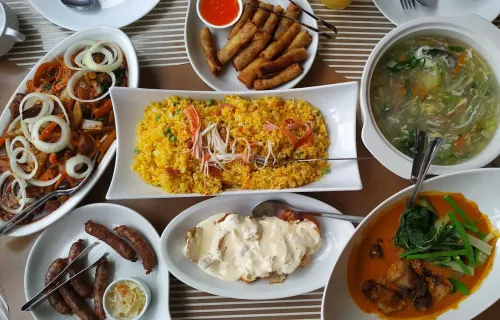
Filipino Food: 12 Essential Dishes (With Tagalog Names)
Filipino food, from adobo to halo-halo: learn the Tagalog names, pronunciations, and ingredients behind 12 dishes you'll want to try on your first trip.

Tagalog Slang Guide: 20 Words You'll Hear on TikTok
Tagalog slang explained: lodi, petmalu, werpa, astig, chika and more. Decode Filipino TikTok comments, group chats, and pop culture with this practical guide.

Magkano: How to Ask "How Much" in Tagalog
Magkano means how much in Tagalog. Learn to ask a price, tell it apart from ilan and gaano, sound polite with po, and haggle at the palengke.

Filipino Family Words and Honorifics: Ate, Kuya & Tita
Filipino family words like ate, kuya, tita, tito, lolo, and lola go far beyond family — learn how Filipinos use them with strangers, plus mano po etiquette.