kare-kare
karé-karé with stress marks
peanut-based stew

Usage Note
Kare-kare is a savory peanut-based stew traditionally made with oxtail and vegetables. It is almost always served with fermented shrimp paste (bagoong) to provide a salty contrast to the rich, nutty sauce.
Examples
" Gusto ko ang kare-kare. "
Natural Translation
I like kare-kare.
Literal Translation
Like I the peanut-stew.
" Masarap ang kare-kare kapag malambot ang karne. "
Natural Translation
Kare-kare is delicious when the meat is tender.
Literal Translation
Delicious the peanut stew when soft the meat.
" Hindi kumpleto ang kare-kare kung walang bagoong na isasawsaw o ihahalo sa kanin. "
Natural Translation
Kare-kare isn't complete without shrimp paste to dip in or mix with the rice.
Literal Translation
Not complete the peanut-stew if none shrimp-paste that will-be-dipped or will-be-mixed in rice.
Take Tagalog with you
The full course, a 12,500-word dictionary, and flashcards that make every word stick — free to start on iOS and Android.




Tagalog builds thousands of words from a few hundred roots.
How Tagalog words workActor Focus Verbs
Object Focus Verbs
Related Words
Explore Tagalog by topic
Free guides on grammar, vocabulary, and culture to take you past single-word lookups.
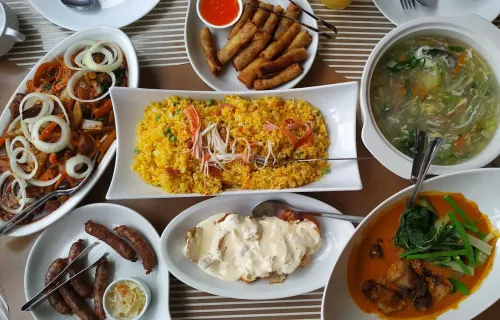
Filipino Food: 12 Essential Dishes (With Tagalog Names)
Filipino food, from adobo to halo-halo: learn the Tagalog names, pronunciations, and ingredients behind 12 dishes you'll want to try on your first trip.

Filipino Family Words and Honorifics: Ate, Kuya & Tita
Filipino family words like ate, kuya, tita, tito, lolo, and lola go far beyond family — learn how Filipinos use them with strangers, plus mano po etiquette.

Seasons in the Philippines: A Tagalog Guide
The Philippines has two seasons, not four. Learn tag-araw, tag-ulan, and taglamig, the generative tag- prefix, and the weather vocabulary to match.

How Long Does It Take to Learn Tagalog?
Survival Tagalog takes ~3-4 weeks and comfortable conversation 6-12 months. FSI's 1,100 hours is the professional bar, not the talking-to-family bar.