Mano Po and Filipino Etiquette: A Visitor's Guide
May 18, 2026 • Jun Alldred • 5 minute read
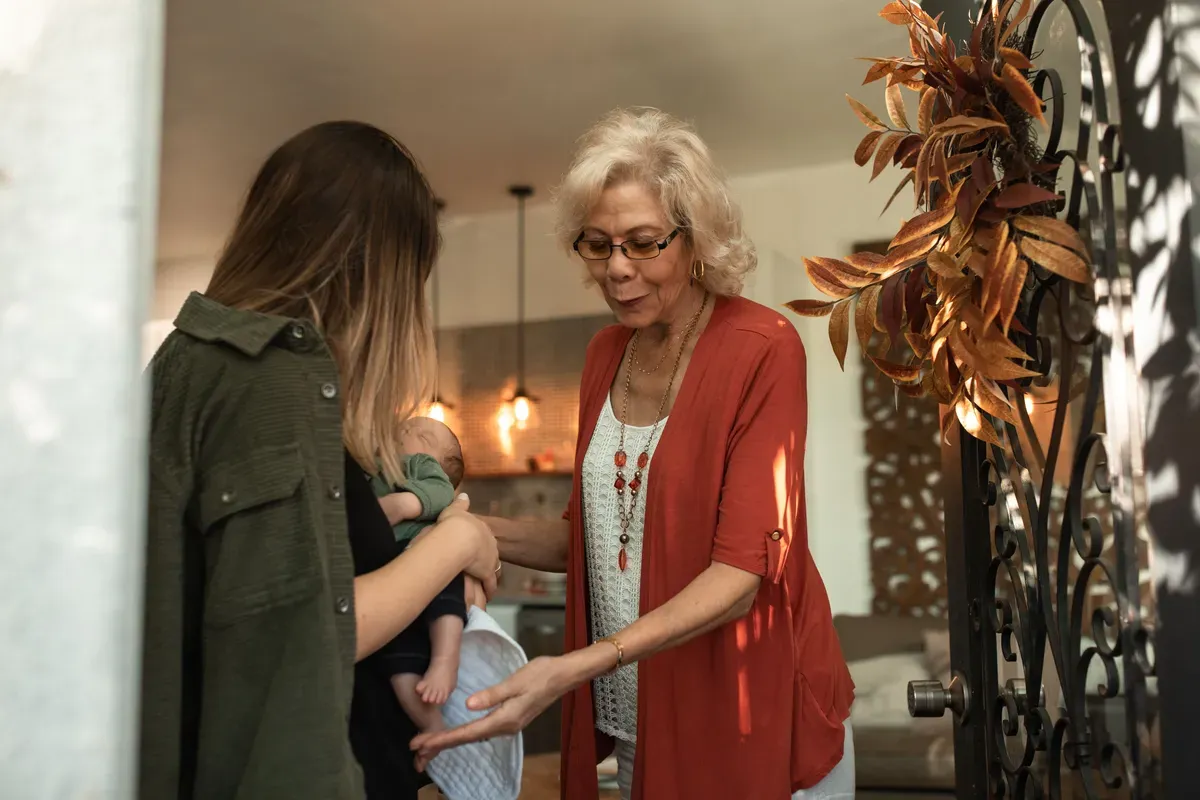
Table of Contents
The first hour inside a Filipino family home is full of small gestures, and most of them are tests you didn’t know you were taking. The good news: Filipino etiquette isn’t a separate rulebook. It’s the same respect system you’ve already been learning in Tagalog, just performed with the body instead of words. If you know po, you already understand why people bow to an elder’s hand. Respect here is something you do — and you’re closer to doing it well than you think.
What “mano po” actually means
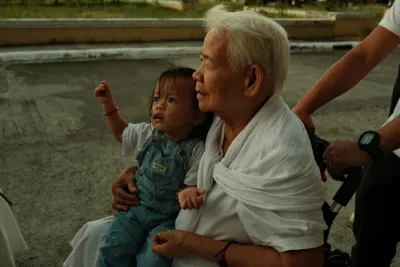
Break the phrase apart and it teaches itself. Mano is Spanish for “hand”; po is the respect particle you’ll recognize from our guide to po and opo. Said together, Mano po means roughly “[your] hand, please.” The act itself is called pagmamano, and the body part at the center of it is the noo — your forehead.
Here’s the sequence. You say Mano po (in many Christian families, Pabless po) to ask permission. You take the elder’s right hand gently, bow toward it, and press the back of that hand to your forehead. The elder answers with a blessing — often a soft “God bless you” — and may trace a small sign of the cross. That’s the whole ritual: a few seconds that say more than a paragraph of polite Tagalog could.
| Tagalog | English | When to Use |
|---|---|---|
| Mano po | [Your] hand, please | As you reach for the elder's right hand |
| Pabless po | Blessing, please | Common Christian variant |
| Noo | Forehead | The part that touches the hand |
Take Tagalog with you
The full course, a 12,500-word dictionary, and flashcards that make every word stick — free to start on iOS and Android.


Who you mano — and who you don’t
This is the single clarification that saves visitors the most embarrassment. Mano is for anyone a generation up: lolo and lola (grandparents), your tatay and nanay, aunts and uncles (tito, tita), godparents, and respected non-relatives like an old neighbor or a priest. It maps cleanly onto the generational ladder in our guide to Filipino family words and honorifics.
Who does not get a mano? Older siblings and older cousins. You call them ate (older sister) or kuya (older brother) and give a hug — not a hand to the forehead. So don’t mano your partner’s slightly-older brother; it’s the classic over-correction that makes everyone wince. “Older than me” isn’t the rule. “A generation above me” is.
Beso and the safe default for new people
Beso-beso is a light cheek-to-cheek touch — often just an air-kiss — used among women, female relatives, and close friends, and increasingly mixed-gender in urban circles. It’s peer warmth, not elder respect. When you’ve just met someone, don’t initiate beso. A handshake and a smile (men) or a smile and small wave (women) is always safe, and you can follow the other person’s lead from there.
Why Filipinos point with their lips
Pointing a finger at a person feels neutral in English but lands as accusatory in the Philippines. So Filipinos point with their lips — nguso, literally “snout.” You purse your lips toward the target, lift your eyebrows, and tilt your chin the same way. It’s the same instinct behind po: soften the signal so it reads as respect, not confrontation.
| Tagalog | English | Notes |
|---|---|---|
| Nguso | Lips; the lip-pointing gesture | Best for directions, among peers |
| Kilay | Eyebrow | Raised during the point; also the silent 'hi' |
| Doon | (Over) there | The direction you're lip-pointing toward |
The eyebrow flick and the right way to beckon
A quick up-and-down flick of both eyebrows — the kilay flick — means “hi, I see you.” It’s the casual nod for a security guard or a neighbor across the street. Flick back or smile; don’t read it as flirting. And when you call someone over, hold your hand out palm down and make a scooping, scratching motion with your fingers. The palm-up, curled-index-finger “come here” is how you summon a dog — genuinely offensive.
Hiya, delicadeza, and the rules under the rules
Under every gesture sits hiya — a sense of social propriety. It’s not Western guilt (“I did wrong inside”) but “what will others think, and will this disturb the group’s harmony?” Its cousin is delicadeza: tact about other people’s dignity. The practical version for a visitor: when an elder offers food, decline once, lightly, then accept. That small hesitation is delicadeza in action — grabbing the plate eagerly can imply you weren’t fed well at home.
Two more phrases carry pure social weight. Kumain ka na (“Have you eaten?”) is a greeting, not a real question — it’s how care gets expressed, much like the warmth in our common Tagalog greetings. And Tabi po is the polite “excuse me” you say passing an elder, or traditionally, passing spirits in nature.
| Tagalog | English |
|---|---|
| Kumain ka na | Have you eaten? (a caring greeting) |
| Tabi po | Excuse me / by your leave |
| Umupo ka muna | Sit down first |
Visiting a Filipino home without a misstep
Never arrive empty-handed. Bring pasalubong — a small gift or treat; biscuits or pandesal count. When the host says Kumain ka muna (“eat first”), expect it repeated, and accept warmly. On the way out you may be handed pabaon — leftovers to take home. Don’t refuse outright; decline once as a token, then take it with thanks. Keep your hands relaxed, too — hands on hips reads as a challenge.
You won’t get every gesture perfect, and nobody expects you to. Reaching for an elder’s hand at all — clumsily, with the wrong phrasing, a beat too late — already says everything that matters. The respect was the point, and you brought it.
Did you get the etiquette?
4 quick questions to see what stuck.
-
Who do you greet with mano po?
Mano is for elders — a generation up. Older siblings and cousins get ate/kuya and a hug instead.
-
Beckoning palm-up with a curled finger is polite in the Philippines.
That gesture is how you call a dog. Beckon with the palm DOWN and a scooping scratch of the fingers.
-
The respect particle inside 'mano ___' that makes the whole gesture polite:
Po is the same respect particle from spoken Tagalog — mano po is po made physical.
-
Match each Tagalog word to its meaning.
Tap a Tagalog word, then its English meaning to pair them.
Tagalog
English
Words in this article
Look up any term for pronunciation, stress marks, and example sentences in the dictionary.
Related Articles
Take Tagalog with you
The full course, a 12,500-word dictionary, and flashcards that make every word stick — free to start on iOS and Android.