Usage Note
Noo is the standard Tagalog word for forehead. It appears in common expressions and idioms; for example, a furrowed forehead (kunot ang noo) signals displeasure or concentration, and pagmamano — the custom of pressing an elder's hand to one's forehead — is a core Filipino gesture of respect. The forehead is a culturally significant body part in everyday social interactions.
Examples
" Masakit ang noo ko. "
Natural Translation
My forehead hurts.
Literal Translation
Painful the forehead my.
" May sugat siya sa kanyang noo. "
Natural Translation
He/she has a wound on his/her forehead.
Literal Translation
Has wound he/she on his/her forehead.
" Kunot ang noo ng aking lola habang binabasa niya ang sulat na hindi niya maintindihan. "
Natural Translation
My grandmother's forehead was furrowed as she read the letter she could not understand.
Literal Translation
Furrowed the forehead of my grandmother while reading she the letter that not she understand.
Take Tagalog with you
The full course, a 12,500-word dictionary, and flashcards that make every word stick — free to start on iOS and Android.




Tagalog builds thousands of words from a few hundred roots.
How Tagalog words workRelated Words
Explore Tagalog by topic
Free guides on grammar, vocabulary, and culture to take you past single-word lookups.

Mano Po and Filipino Etiquette: A Visitor's Guide
Mano po presses an elder's hand to your forehead as a blessing. Learn who to mano, how to lip-point, and the etiquette that wins over a Filipino family.

Tagalog Slang Guide: 20 Words You'll Hear on TikTok
Tagalog slang explained: lodi, petmalu, werpa, astig, chika and more. Decode Filipino TikTok comments, group chats, and pop culture with this practical guide.

Tagalog Question Words: Ano, Sino, Saan & More
Tagalog question words like ano, sino, and saan need the right frame to work. Learn the ang-vs-pronoun rule, confusable pairs, and the ba particle with audio.
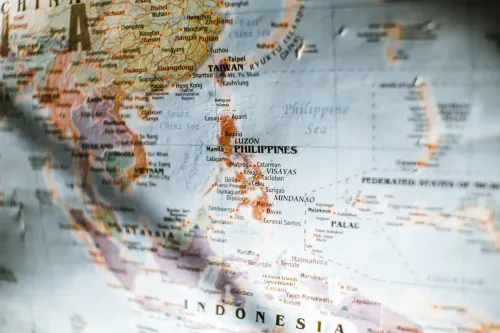
Philippines Geography for Learners: Islands & Language
Philippines geography for Tagalog learners: 7,641 islands, three island groups, and the Southern Luzon heartland where the Tagalog language was born.