nominatibo
nominatíbo with stress marks
nominative
Usage Note
Nominatibo is a grammatical term referring to the nominative case, used in Philippine linguistics and language education when describing Tagalog or classical language grammar. It appears primarily in academic textbooks and formal linguistic discourse. In Tagalog grammar, the nominative case markers are ang (singular) and ang mga (plural).
Examples
" Nasa anyong nominatibo ang salita. "
Natural Translation
The word is in the nominative form.
Literal Translation
In form nominative the word.
" Ang paksa ng pangungusap ay nasa anyong nominatibo. "
Natural Translation
The subject of the sentence is in the nominative form.
Literal Translation
The subject of sentence is in form nominative.
" Sa pag-aaral ng balarila, mahalagang malaman kung kailan nominatibo ang isang pangngalan upang maintindihan kung sino ang gumaganap ng kilos. "
Natural Translation
In studying grammar, it is important to know when a noun is nominative in order to understand who is performing the action.
Literal Translation
In study of grammar, important known when nominative the one noun so-that understood who the performing of action.
Take Tagalog with you
The full course, a 12,500-word dictionary, and flashcards that make every word stick — free to start on iOS and Android.




Tagalog builds thousands of words from a few hundred roots.
How Tagalog words workRelated Words
Explore Tagalog by topic
Free guides on grammar, vocabulary, and culture to take you past single-word lookups.

Tagalog Question Words: Ano, Sino, Saan & More
Tagalog question words like ano, sino, and saan need the right frame to work. Learn the ang-vs-pronoun rule, confusable pairs, and the ba particle with audio.

How to Say Sorry in Tagalog: Patawad vs Pasensya
How to say sorry in Tagalog: patawad, pasensya na, and paumanhin compared on a simple severity-and-formality ladder so you pick the right word every time.

Po and Opo in Tagalog: Where to Put Them Right
Po and opo confuse learners — but placement follows one rule. Where po goes in a sentence, why it's opo not 'oo po', and the pronoun shift to learn.
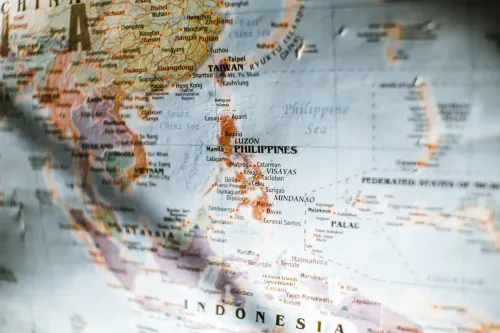
Philippines Geography for Learners: Islands & Language
Philippines geography for Tagalog learners: 7,641 islands, three island groups, and the Southern Luzon heartland where the Tagalog language was born.