Usage Note
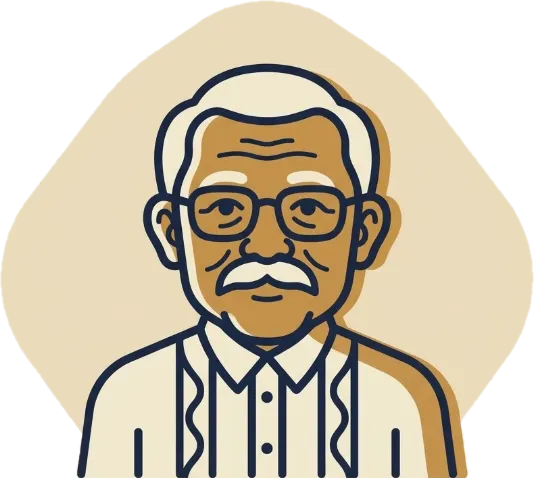
Lolo is used to address one's grandfather or any elderly man as a sign of respect in Filipino culture. It is common to use this term followed by the person's name or nickname, such as Lolo Jose.
Examples
" Mabait ang lolo ko. "
Natural Translation
My grandfather is kind.
Literal Translation
Kind the grandfather my.
" Ang lolo ko ay masaya. "
Natural Translation
My grandfather is happy.
Literal Translation
The grandfather my is happy.
" Tuwing bakasyon, nagkukuwento ang lolo ko tungkol sa buhay niya noong panahon ng digmaan. "
Natural Translation
Every vacation, my grandfather tells stories about his life back during the time of the war.
Literal Translation
Every vacation, tells-stories the grandfather my about the life his during time of war.
Take Tagalog with you
The full course, a 12,500-word dictionary, and flashcards that make every word stick — free to start on iOS and Android.




Tagalog builds thousands of words from a few hundred roots.
How Tagalog words workRelated Words
Explore Tagalog by topic
Free guides on grammar, vocabulary, and culture to take you past single-word lookups.

Filipino Family Words and Honorifics: Ate, Kuya & Tita
Filipino family words like ate, kuya, tita, tito, lolo, and lola go far beyond family — learn how Filipinos use them with strangers, plus mano po etiquette.

How to Say "I Love You" in Tagalog: Phrases & Meaning
Learn how to say I love you in Tagalog. Mahal kita, Iniibig kita, and Filipino terms of endearment for partners, family, and friends — with cultural notes.

Tagalog Pronouns Explained: Complete Chart with Examples
Every Tagalog pronoun explained with clear charts: ang/ng/sa forms, tayo vs kami, ikaw vs ka, politeness markers, and the mistakes beginners make.

Tagalog Time Expressions: Past, Present & Future Guide
Tagalog has no tenses — it uses aspect. Learn time words, days of the week, clock time, and the aspect system, with vocabulary tables and cultural notes.