anak
anák with stress marks
child; offspring

Usage Note
Anak refers to one's offspring regardless of age and is frequently used by elders as an affectionate term of address for younger people, even if they are not related. This usage reflects a cultural sense of parental care toward the younger generation.
Examples
" Dalawa ang anak nila. "
Natural Translation
They have two children.
Literal Translation
Two the child their.
" Mahal ko ang aking anak. "
Natural Translation
I love my child.
Literal Translation
Love I my child.
" Bilang panganay na anak, siya ang nagbubuhay sa kanilang pamilya simula nang pumanaw ang kanilang ama. "
Natural Translation
As the eldest child, he/she is the one supporting their family ever since their father passed away.
Literal Translation
As eldest child, he/she the supporting to their family since when passed-away the their father.
Take Tagalog with you
The full course, a 12,500-word dictionary, and flashcards that make every word stick — free to start on iOS and Android.




Tagalog builds thousands of words from a few hundred roots.
How Tagalog words workDerived Words
Actor Focus Verbs
Object Focus Verbs
Related Words
Explore Tagalog by topic
Free guides on grammar, vocabulary, and culture to take you past single-word lookups.

Is Tagalog Hard to Learn? An Honest Answer
Tagalog takes around 1,100 hours to reach professional proficiency. Here is what is easy, what is hard, and what to expect at 3, 6, and 12 months.

Tagalog Word Order: Sentence Structure Made Simple
Why Tagalog puts the verb first, and how ang, ng, and sa markers work. A clear guide to VSO word order, forming questions, and negation.

Seasons in the Philippines: A Tagalog Guide
The Philippines has two seasons, not four. Learn tag-araw, tag-ulan, and taglamig, the generative tag- prefix, and the weather vocabulary to match.
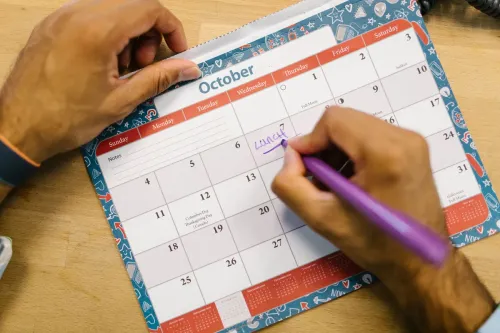
Days of the Week and Months in Tagalog
The days of the week and months in Tagalog are Spanish loanwords. Learn all 7 days and 12 months with pronunciation, plus how to say dates and 'every Monday.'