Table of Contents
- The Days of the Week (Mga Araw ng Linggo)
- Linggo vs. linggo — Sunday or week?
- The Months of the Year (Mga Buwan ng Taon)
- How to Actually Use Days in a Sentence
- tuwing — every / recurring
- sa — on an upcoming day
- noong / nung — on a past day
- Saying Dates in Tagalog
- Pronunciation Tips for English Speakers
If you already know a few words of Spanish, you are about to learn an entire calendar’s worth of Tagalog in one sitting. Spain ruled the Philippines for roughly 333 years, and the calendar came along with it — so the days and months are nearly identical to their Spanish cousins. The vocabulary is the easy part. What actually trips learners up is using a day in a sentence and reading a date out loud, and that is where this guide spends most of its time.
The Days of the Week (Mga Araw ng Linggo)
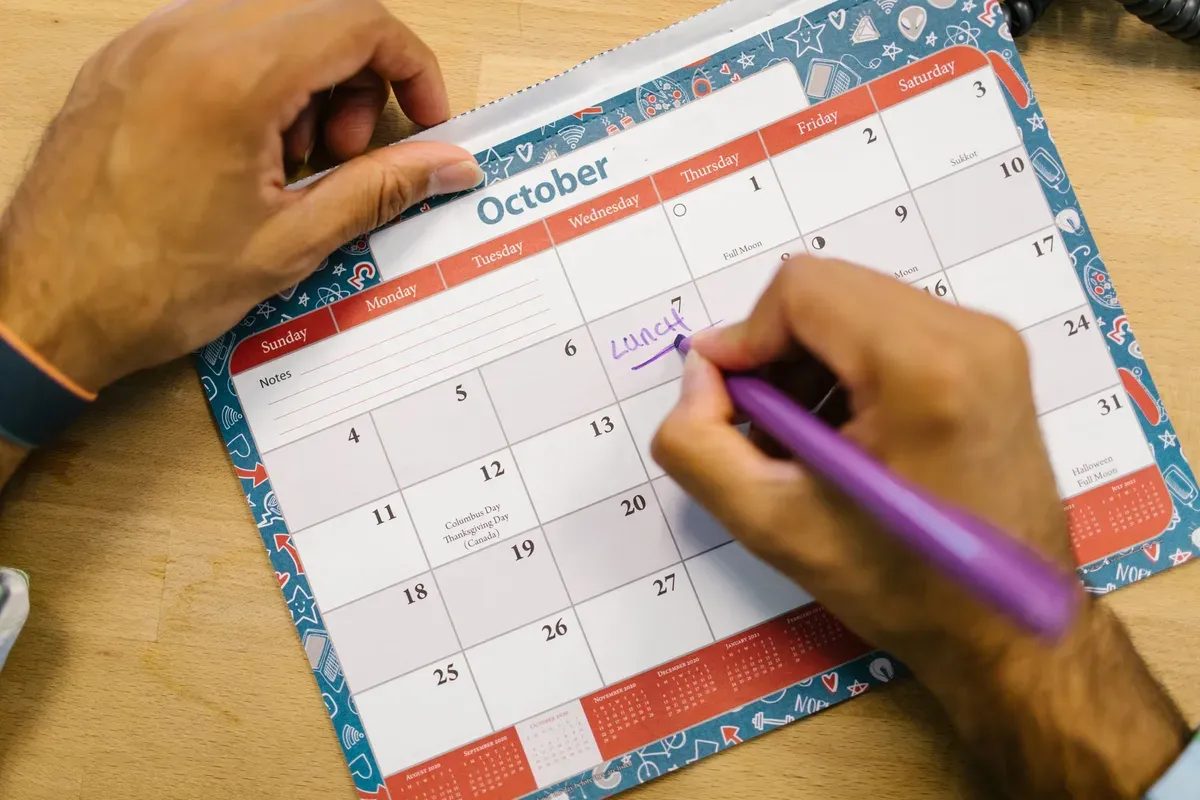
The umbrella phrase is mga araw ng linggo — literally “days of the week,” where the native word araw means “day” and lowercase linggo means “week.” Six of the seven days came directly from Spanish; only Sunday took a different route, arriving through Malay before settling into Tagalog.
| Tagalog | English | From Spanish |
|---|---|---|
| Lunes | Monday | lunes |
| Martes | Tuesday | martes |
| Miyerkules | Wednesday | miércoles |
| Huwebes | Thursday | jueves |
| Biyernes | Friday | viernes |
| Sabado | Saturday | sábado |
| Linggo | Sunday | domingo (via Malay) |
Notice the sound shifts: Spanish jueves loses its “j” sound and becomes Huwebes, while viernes swaps its “v” for a “b” to give Biyernes. Tagalog has no native “v,” “f,” or “j,” so loanwords get re-spelled to match.
Linggo vs. linggo — Sunday or week?
This is the single most useful capitalization rule in the whole calendar. Capitalized, Linggo is the day of the week — Nakita kita noong nakaraang Linggo (“I saw you last Sunday”). Lowercase, linggo is a span of seven days — sa isang linggo (“in a week”). Same spelling, different meaning, decided entirely by one capital letter.
The Months of the Year (Mga Buwan ng Taon)
The word for month is buwan, which also means “moon” — a nice reminder that months were once measured by the moon. All twelve are Spanish loanwords, and all are capitalized.
| Tagalog | English | From Spanish |
|---|---|---|
| Enero | January | enero |
| Pebrero | February | febrero |
| Marso | March | marzo |
| Abril | April | abril |
| Mayo | May | mayo |
| Hunyo | June | junio |
| Hulyo | July | julio |
| Agosto | August | agosto |
| Setyembre | September | septiembre |
| Oktubre | October | octubre |
| Nobyembre | November | noviembre |
| Disyembre | December | diciembre |
Spot the sound shift again: febrero becomes Pebrero because Tagalog turns the “f” into a “p.” And the four English “-ber” months are the same four “-bre/-mbre” months here — Filipinos call them the “Ber months,” the unofficial countdown to one of the world’s longest Christmas seasons.
Take Tagalog with you
The full course, a 12,500-word dictionary, and flashcards that make every word stick — free to start on iOS and Android.




How to Actually Use Days in a Sentence
Here is the part most flashcard lists skip. Three small words decide how a day attaches to your sentence, and picking the wrong one changes the meaning.
tuwing — every / recurring
Use tuwing for habitual, repeating events. It takes no na/-ng linker — it sits directly in front of the day.
| Tagalog | English |
|---|---|
| Tuwing Lunes ako nagtatrabaho | I work every Monday |
| May klase ako tuwing Martes | I have class every Tuesday |
For “every day,” though, Tagalog prefers the reduplicated araw-araw, not tuwing araw — say araw-araw akong nag-eehersisyo (“I exercise every day”).
sa — on an upcoming day
Use sa for one specific day that is still ahead, or for a calendar date: Magkita tayo sa Sabado (“Let’s meet on Saturday”), or Sa Enero ang kasal (“The wedding is in January”).
noong / nung — on a past day
Use noong (casual: nung) for a day already gone, often with nakaraang (“last”): Noong Lunes ako dumating (“I arrived on Monday”), noong nakaraang Linggo (“last Sunday”).
| Marker | When | Example |
|---|---|---|
| tuwing Biyernes | every Friday | recurring |
| sa Biyernes | this coming Friday | upcoming |
| noong Biyernes | last Friday | past |
These three markers also drive most of telling time, so it’s worth seeing them in their wider home — our Tagalog time expressions guide walks through kahapon, bukas, and the aspect system that pairs with them.
Saying Dates in Tagalog
Formal dates follow one tidy pattern: an ordinal number (the ika- prefix) + ng + the month. So January 1 is ika-1 ng Enero, and Valentine’s Day is ika-14 ng Pebrero. When you spell the ordinal out fully there’s no hyphen (ikalabinlima ng Enero); with a numeral you keep it (ika-15 ng Enero). The everyday spoken question is Anong petsa na — where petsa means “date.”
For a range, reach for mula … hanggang: Mula Lunes hanggang Biyernes means “From Monday to Friday.”
Pronunciation Tips for English Speakers
Tagalog vowels stay pure — a is always “ah,” e is “eh,” i is “ee,” o is “oh,” u is “oo.” There’s no English schwa, so Sabado is “sah-BAH-doh,” every vowel fully voiced, not “SAB-uh-doh.” Remember the missing letters too: no native “v,” “f,” or “j” means viernes lands as Biyernes, febrero as Pebrero, and jueves as Huwebes. The Spanish cognates even help keep look-alikes apart — Martes (Tuesday) and Huwebes (Thursday) feel unrelated once you hear martes and jueves underneath them.
You now have all seven days, all twelve months, and the three little words that make them behave in a sentence — more than most learners pick up in their first month. Say tomorrow’s day out loud, name the date, and watch how fast the Spanish patterns start doing the work for you.
Days and months check
5 quick questions to see what stuck.
-
Match each Tagalog day to its English meaning.
Tap a Tagalog word, then its English meaning to pair them.
Tagalog
English
Six of the seven days come straight from Spanish — Miyerkules is just miércoles re-spelled to Tagalog spelling.
-
Capitalized Linggo means 'Sunday,' but lowercase linggo means 'week.'
This is the one capitalization trap worth memorising. Linggo (proper noun) is the day; linggo (common noun) is the time span.
-
How do you say 'every Monday' for a recurring event?
Tuwing marks recurring events and takes no linker. Sa points to one upcoming day; noong points to a past one.
-
Spanish febrero becomes this Tagalog month (Spanish 'f' turns into Tagalog 'p'): ___.
Tagalog has no native 'f' sound, so febrero is re-spelled Pebrero. The same shift explains Huwebes (jueves) and Biyernes (viernes).
-
Which is the correct way to write 'January 15'?
Dates run ordinal + ng + month: ika-15 ng Enero. The ng is required and the ordinal comes before the month.
Words in this article
Look up any term for pronunciation, stress marks, and example sentences in the dictionary.
Related Articles

Take Tagalog with you
The full course, a 12,500-word dictionary, and flashcards that make every word stick — free to start on iOS and Android.