Tagalog Numbers 1-100: Counting, Time & Money Explained
February 9, 2026 • Jun Alldred • 5 minute read
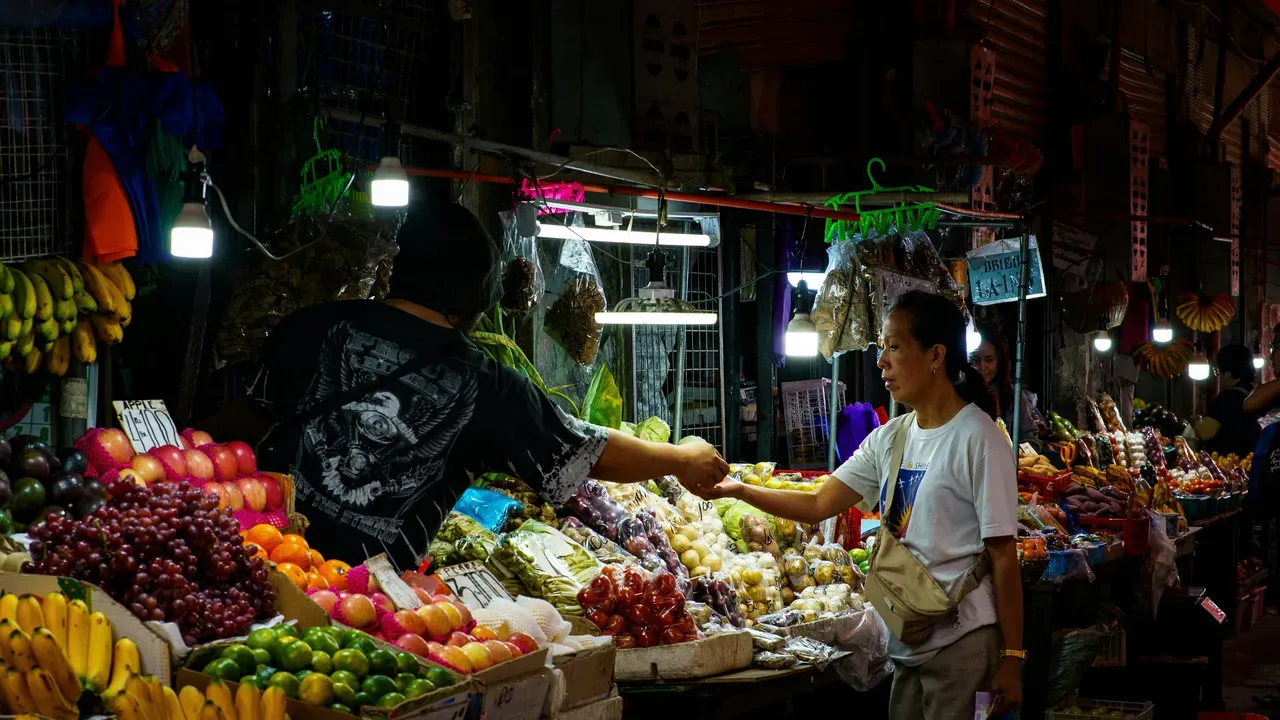
Table of Contents
Here is something that surprises most new Tagalog learners: Filipino has not one, but two number systems running side by side. Native Tagalog numbers come from the language’s Austronesian roots, while a second set arrived during 333 years of Spanish colonization. Today, Filipinos switch between them — and throw in English for good measure — without thinking twice.
That sounds intimidating, but it is actually manageable once you see the pattern. This guide walks you through both systems, shows you when Filipinos reach for each one, and covers the real-world situations you will hit first: counting things, reading prices, and telling time.
Native Tagalog Numbers 1-10
Start here. These are the numbers you will use most often when counting objects, people, and quantities.
| Number | Tagalog |
|---|---|
| 1 | isa |
| 2 | dalawa |
| 3 | tatlo |
| 4 | apat |
| 5 | lima |
| 6 | anim |
| 7 | pito |
| 8 | walo |
| 9 | siyam |
| 10 | sampu |
Spanish-Derived Numbers
These are the numbers you will hear for time, prices, and ages. They are spelled the Filipino way, not the original Spanish.
| Number | Native Tagalog | Spanish-Derived |
|---|---|---|
| 1 | isa | uno |
| 2 | dalawa | dos |
| 3 | tatlo | tres |
| 4 | apat | kwatro |
| 5 | lima | singko |
| 6 | anim | sais |
| 7 | pito | syete |
| 8 | walo | otso |
| 9 | siyam | nwebe |
| 10 | sampu | dyes |
For the tens, Spanish-derived numbers have their own forms: beynte (20), treynta (30), kwarenta (40), singkwenta (50), sisenta (60), sitenta (70), otsenta (80), nobenta (90), and siyento (100).
Compound Spanish-derived numbers use y (pronounced “ee”) as a conjunction: treynta y uno (31), kwarenta y singko (45), nobenta y nwebe (99).
Take Tagalog with you
The full course, a 12,500-word dictionary, and flashcards that make every word stick — free to start on iOS and Android.




When Filipinos Use Which System
This is the part that confuses learners most, so here is a practical cheat sheet:
Use Spanish-derived numbers for:
- Telling time — alas tres (3 o’clock), not “alas tatlo”
- Prices in conversation — beynte pesos (20 pesos), singkwenta (50)
- Stating age — beynte-singko anyos (25 years old)
- Dates informally — a-kinse ng Marso (March 15)
Use native Tagalog numbers for:
- Counting objects — tatlong mansanas (three apples)
- Counting people — limang tao (five people)
- Round hundreds and thousands — isang daan (100), isang libo (1,000)
- Formal dates — ika-15 ng Marso (March 15)
The honest truth? There is overlap, and Filipinos mix freely. If you use the “wrong” system, people will still understand you perfectly. Learn both, and you will start to feel which one fits each situation naturally.
Counting Higher: Teens, Tens, and Beyond
Native Tagalog builds bigger numbers with predictable prefixes and suffixes.
Teens (11-19) use the prefix labing-: labingisa (11), labingdalawa (12), labintatlo (13), labing-apat (14), labinlima (15), labing-anim (16), labimpito (17), labingwalo (18), labinsiyam (19).
Tens (20-90) use the suffix -pu: dalawampu (20), tatlumpu (30), apatnapu (40), limampu (50), animnapu (60), pitumpu (70), walumpu (80), siyamnapu (90).
Compound numbers join tens and ones with ‘t (short for “at,” meaning “and”): dalawampu’t isa (21), tatlumpu’t lima (35), siyamnapu’t siyam (99).
For hundreds and thousands: isang daan (100), dalawang daan (200), limang daan (500), isang libo (1,000), sampung libo (10,000).
Telling Time
Time in Tagalog almost always uses Spanish-derived numbers. The basic structure is alas + number + time of day.
| Time | Tagalog | Notes |
|---|---|---|
| 1:00 | ala una | ”ala” (not “alas”) for 1 only |
| 2:00 | alas dos | ”alas” for 2 through 12 |
| 3:00 | alas tres | |
| 2:30 | alas dos y medya | ”y medya” = half past |
| 3:15 | alas tres y kinse | ”y kinse” = and fifteen |
Add a time-of-day marker after the number: ng umaga (morning), ng tanghali (noon), ng hapon (afternoon), ng gabi (evening). So 3:00 PM is alas tres ng hapon.
For a deeper look at time vocabulary, see Tagalog Time Expressions.
Money and Prices
The Philippine currency is the piso (peso). Here is how prices actually sound in conversation:
| Price | How Filipinos Say It |
|---|---|
| 5 pesos | limang piso or singko pesos |
| 20 pesos | beynte pesos |
| 50 pesos | singkwenta |
| 100 pesos | isang daan |
| 500 pesos | limang daan |
| 1,000 pesos | isang libo |
The pattern: Spanish-derived numbers dominate for small bills and odd amounts (beynte-singko, sitenta y singko), while native Tagalog takes over for round hundreds and thousands.
Ordinal Numbers
Tagalog ordinals use the prefix ika- for sequence:
| Ordinal | Tagalog |
|---|---|
| 1st | una (exception — from Spanish) |
| 2nd | ikalawa |
| 3rd | ikatlo |
| 4th | ikaapat |
| 5th | ikalima |
There is a second prefix, pang-, used for rankings and titles: pangalawang pangulo means “vice-president” (literally “second president”). For everyday counting and sequences, ika- is what you want.
Keep Going
You now have a working foundation for both Tagalog number systems. The linker rule, the time structure, and the “which system when” instincts will sharpen fast once you start hearing these numbers in real conversations. Do not stress about memorizing every form up front — focus on 1-10 in both systems, get comfortable with prices and time, and let the rest come naturally.
If you are just starting out with Tagalog, common greetings are another great next step for building everyday confidence.
Number systems check
4 quick questions to see what stuck.
-
Which number system do Filipinos normally use for telling time?
Time almost always uses Spanish-derived numbers — 'alas tres' (3 o'clock), not 'alas tatlo'.
-
Match each native Tagalog number to its value.
Tap a Tagalog word, then its English meaning to pair them.
Tagalog
English
These are the first ten native Tagalog numbers — the building blocks for counting objects and people.
-
The time 1 o'clock follows the same pattern as all other hours and is said 'alas uno'.
1 o'clock is 'ala una' — no S. Every other hour uses 'alas' (alas dos, alas tres…).
-
When a number ending in a vowel comes before a noun, you connect them with the linker ___.
Numbers ending in a vowel add -ng (e.g. tatlo + ng = tatlong libro). Numbers ending in a consonant use the separate word 'na'.
Words in this article
Look up any term for pronunciation, stress marks, and example sentences in the dictionary.
Related Articles
Take Tagalog with you
The full course, a 12,500-word dictionary, and flashcards that make every word stick — free to start on iOS and Android.