kanin
kánin with stress marks
cooked rice

Usage Note
Kanin refers to rice that has been cooked, distinguishing it from bigas (raw grains). As the primary staple food in the Philippines, it is served at almost every meal and is central to Filipino culture.
Examples
" Masarap ang mainit na kanin. "
Natural Translation
Hot rice is delicious.
Literal Translation
Delicious the hot rice.
" Gusto ko ng maraming kanin. "
Natural Translation
I want a lot of rice.
Literal Translation
Want I of plenty rice.
" Kapag walang kanin sa hapag, parang hindi pa kumpleto ang hapunan ng pamilya namin. "
Natural Translation
When there's no rice on the table, it feels like our family's dinner isn't complete yet.
Literal Translation
When no-have rice on table, like not yet complete the dinner of family our.
Take Tagalog with you
The full course, a 12,500-word dictionary, and flashcards that make every word stick — free to start on iOS and Android.




Tagalog builds thousands of words from a few hundred roots.
How Tagalog words workDerived Words
Actor Focus Verbs
Object Focus Verbs
Related Words
Explore Tagalog by topic
Free guides on grammar, vocabulary, and culture to take you past single-word lookups.
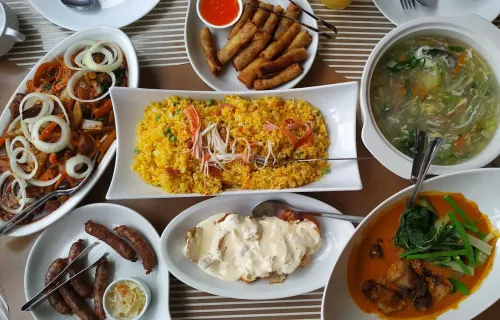
Filipino Food: 12 Essential Dishes (With Tagalog Names)
Filipino food, from adobo to halo-halo: learn the Tagalog names, pronunciations, and ingredients behind 12 dishes you'll want to try on your first trip.

Mano Po and Filipino Etiquette: A Visitor's Guide
Mano po presses an elder's hand to your forehead as a blessing. Learn who to mano, how to lip-point, and the etiquette that wins over a Filipino family.

Tagalog Verb Focus System Explained (It's Not Active vs. Passive)
The Tagalog verb focus system isn't active vs. passive. Learn actor focus, object focus, and more with clear examples that finally make it click.

Days of the Week and Months in Tagalog
The days of the week and months in Tagalog are Spanish loanwords. Learn all 7 days and 12 months with pronunciation, plus how to say dates and 'every Monday.'