
From root: antala
Conjugations
Past (Completed)
iniantala
i-ni-an-ta-LA
postponed
Present (Incomplete)
iniaantala
i-ni-a-an-ta-LA
is postponing
Future (Contemplated)
iaantala
i-a-an-ta-LA
will postpone
Usage Note
Iantala is used when describing the delay or postponement of a specific event or activity, typically within formal or official contexts. It emphasizes that the action is being done to the event itself, such as a flight or a meeting.
Examples
" Huwag mong iantala ang miting. "
Natural Translation
Don't postpone the meeting.
Literal Translation
Don't you postpone the meeting.
" Ayaw kong iantala ang lakad natin. "
Natural Translation
I don't want to postpone our trip.
Literal Translation
Dislike I postpone the trip our.
" Napilitan kaming iantala ang seremonya dahil hindi pa dumarating ang ilang panauhin mula sa probinsya. "
Natural Translation
We were forced to postpone the ceremony because some guests from the province hadn't arrived yet.
Literal Translation
Forced we postpone the ceremony because not yet arriving the some guests from the province.
Take Tagalog with you
The full course, a 12,500-word dictionary, and flashcards that make every word stick — free to start on iOS and Android.




Tagalog builds thousands of words from a few hundred roots.
How Tagalog words workWord family
antala has 7 related forms built from the same root.
Related Words
Explore Tagalog by topic
Free guides on grammar, vocabulary, and culture to take you past single-word lookups.
How to Say Sorry in Tagalog: Patawad vs Pasensya
How to say sorry in Tagalog: patawad, pasensya na, and paumanhin compared on a simple severity-and-formality ladder so you pick the right word every time.

Tagalog Affixes Explained: A Beginner's Guide to Word Building
Tagalog affixes turn one root word into dozens of meanings. Learn prefixes, infixes, suffixes, and circumfixes with clear examples for beginners.

Tagalog Slang Guide: 20 Words You'll Hear on TikTok
Tagalog slang explained: lodi, petmalu, werpa, astig, chika and more. Decode Filipino TikTok comments, group chats, and pop culture with this practical guide.
Philippines Geography for Learners: Islands & Language
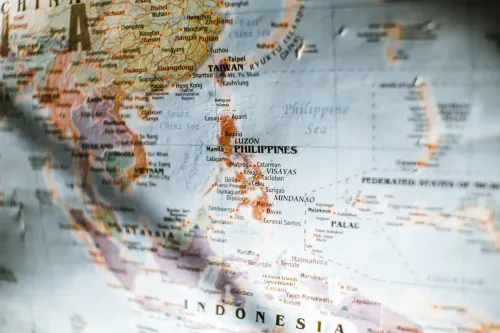
Philippines geography for Tagalog learners: 7,641 islands, three island groups, and the Southern Luzon heartland where the Tagalog language was born.