From root: bahala
Conjugations
Past (Completed)
nabahala
na-ba-HA-la
worried
Present (Incomplete)
nababahala
na-ba-ba-HA-la
is worrying
Future (Contemplated)
mababahala
ma-ba-ba-HA-la
will worry
Usage Note
Mabahala is used to express worry or concern, often carrying a slightly more formal or serious tone than the common synonym 'mag-alala'. It is most frequently encountered in the phrase 'Huwag kang mabahala' to reassure someone that a situation is being handled or that they should remain calm.
Examples
" Huwag kang mabahala. "
Natural Translation
Don't worry.
Literal Translation
Do-not you to-worry.
" Huwag kang mabahala sa mga nangyayari. "
Natural Translation
Do not worry about what is happening.
Literal Translation
Do-not you to-worry at plural happening.
" Nabahala ang mga magulang nang hindi pa rin umuuwi ang kanilang anak kahit hatinggabi na. "
Natural Translation
The parents became worried when their child still had not come home even though it was already midnight.
Literal Translation
Worried the parents when not yet also coming-home the their child even-though midnight already.
Take Tagalog with you
The full course, a 12,500-word dictionary, and flashcards that make every word stick — free to start on iOS and Android.




Tagalog builds thousands of words from a few hundred roots.
How Tagalog words workWord family
bahala has 6 related forms built from the same root.
Related Words
Explore Tagalog by topic
Free guides on grammar, vocabulary, and culture to take you past single-word lookups.
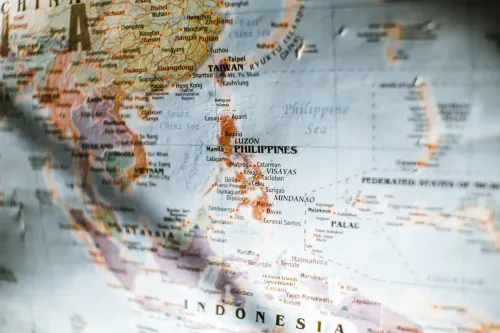
Philippines Geography for Learners: Islands & Language
Philippines geography for Tagalog learners: 7,641 islands, three island groups, and the Southern Luzon heartland where the Tagalog language was born.

Spaced Repetition for Tagalog: How Flashcards Make Words Stick
Cramming Tagalog vocabulary fails. See how spaced repetition — the science behind smart flashcards — makes words stick for the long term.

Languages of the Philippines: Tagalog, Cebuano, and More
Languages of the Philippines: one national language (Filipino) plus 180+ regional languages. Here's who speaks what, where, and why it matters to you.

Tagalog Time Expressions: Past, Present & Future Guide
Tagalog has no tenses — it uses aspect. Learn time words, days of the week, clock time, and the aspect system, with vocabulary tables and cultural notes.