
From root: bangka
Conjugations
Past (Completed)
nambangka
nam-bang-KA
went boating
Present (Incomplete)
nambabangka
nam-ba-bang-KA
is boating
Future (Contemplated)
mambabangka
mam-ba-bang-KA
will go boating
Usage Note
Mambangka is used when referring to the act of riding or navigating a boat for leisure or travel, often implying a deliberate excursion on the water. In social settings, it can also colloquially describe someone leading or dominating a group conversation, much like a boatman steering a vessel.
Examples
" Gusto naming mambangka bukas. "
Natural Translation
We want to go boating tomorrow.
Literal Translation
Want we to-go-boating tomorrow.
" Siya ang mambangka para sa ating lahat. "
Natural Translation
He/she is the one who will handle the boat for all of us.
Literal Translation
He/she the one-to-go-boating for to our all.
" Tuwing bakasyon, mahilig kaming mambangka sa lawa habang sumisikat ang araw at malamig pa ang hangin. "
Natural Translation
Every vacation, we love to go boating on the lake while the sun is rising and the air is still cool.
Literal Translation
Every vacation, fond we to-go-boating on lake while rising the sun and cool still the wind.
Take Tagalog with you
The full course, a 12,500-word dictionary, and flashcards that make every word stick — free to start on iOS and Android.




Tagalog builds thousands of words from a few hundred roots.
How Tagalog words workWord family
bangka has 9 related forms built from the same root.
Related Words
Explore Tagalog by topic
Free guides on grammar, vocabulary, and culture to take you past single-word lookups.

How Long Does It Take to Learn Tagalog?
Survival Tagalog takes ~3-4 weeks and comfortable conversation 6-12 months. FSI's 1,100 hours is the professional bar, not the talking-to-family bar.
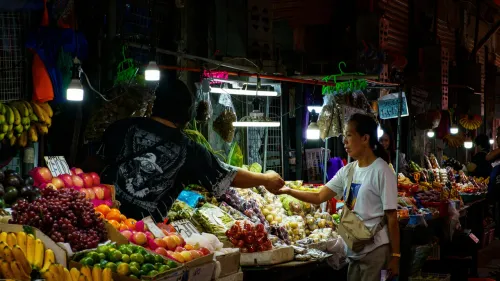
Tagalog Numbers 1-100: Counting, Time & Money Explained
Learn Tagalog numbers 1-100 and beyond. Master both native and Spanish-derived counting systems, plus telling time, reading prices, and ordinals.

Magkano: How to Ask "How Much" in Tagalog
Magkano means how much in Tagalog. Learn to ask a price, tell it apart from ilan and gaano, sound polite with po, and haggle at the palengke.

Ang, Ng, Sa: The 3 Tagalog Case Markers Explained
Ang, ng, sa are the three Tagalog case markers every noun takes. Learn what each does, the personal forms si/ni/kay, plurals with mga, and clear examples.