napakamabango
very fragrant
From root: bango
Usage Note
Napakamabango is used to provide strong emphasis when a scent is exceptionally pleasant.
Examples
" Napakamabango ng bulaklak. "
Natural Translation
The flower is very fragrant.
Literal Translation
Very-fragrant the flower.
" Napakamabango ng bagong labang damit. "
Natural Translation
Freshly washed clothes are very fragrant.
Literal Translation
Very fragrant the newly washed clothes.
" Napakamabango ng kanin na luto sa kawayan, kaya kahit walang ulam ay nakakagana itong kainin. "
Natural Translation
Rice cooked in bamboo is very fragrant, so even without a viand it's appetizing to eat.
Literal Translation
Very-fragrant the rice that cooked in bamboo, so even without viand is appetizing this eat.
Take Tagalog with you
The full course, a 12,500-word dictionary, and flashcards that make every word stick — free to start on iOS and Android.




Tagalog builds thousands of words from a few hundred roots.
How Tagalog words workWord family
bango has 8 related forms built from the same root.
Related Words
Explore Tagalog by topic
Free guides on grammar, vocabulary, and culture to take you past single-word lookups.
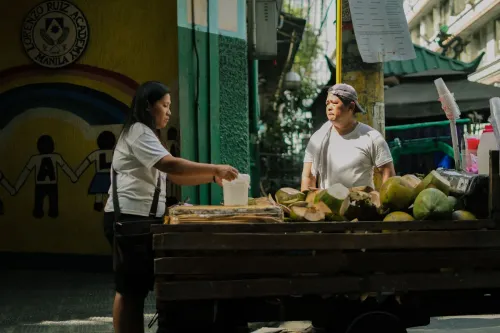
Magkano: How to Ask "How Much" in Tagalog
Magkano means how much in Tagalog. Learn to ask a price, tell it apart from ilan and gaano, sound polite with po, and haggle at the palengke.
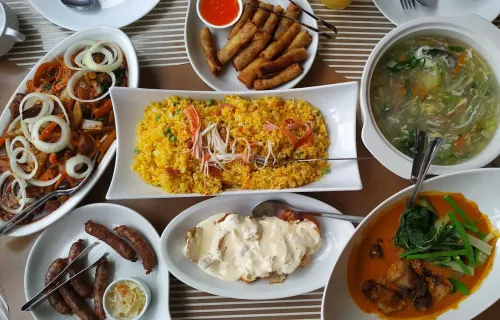
Filipino Food: 12 Essential Dishes (With Tagalog Names)
Filipino food, from adobo to halo-halo: learn the Tagalog names, pronunciations, and ingredients behind 12 dishes you'll want to try on your first trip.
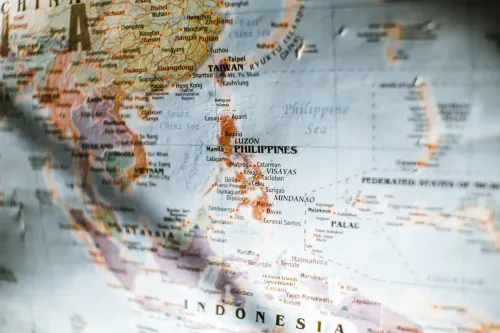
Philippines Geography for Learners: Islands & Language
Philippines geography for Tagalog learners: 7,641 islands, three island groups, and the Southern Luzon heartland where the Tagalog language was born.

Ng vs Nang in Tagalog: The Spelling Rule
Ng vs nang sound identical but spell differently. Use ng to mark nouns (of, the object), and nang for how, when, repetition, and counting time.