
From root: bati
Conjugations
Past (Completed)
bumati
bu-MA-ti
greeted
Present (Incomplete)
bumabati
bu-ma-BA-ti
greeting
Future (Contemplated)
babati
ba-BA-ti
will greet
Usage Note
Bumati is used when acknowledging someone's presence through a verbal or physical greeting, which is a key part of Filipino social etiquette. It is often used in both formal and informal contexts, such as greeting an elder or a friend during an encounter.
Examples
" Bumati ka sa lola mo. "
Natural Translation
Greet your grandmother.
Literal Translation
Greet you to grandmother your.
" Dapat tayong bumati sa mga nakatatanda. "
Natural Translation
We should greet the elders.
Literal Translation
Should we to greet to the elders.
" Tuwing umaga, bumabati ang masayahing bantay sa bawat estudyante na pumapasok sa paaralan. "
Natural Translation
Every morning, the cheerful guard greets each student who enters the school.
Literal Translation
Every morning, greeting the cheerful guard to each student who entering to school.
Take Tagalog with you
The full course, a 12,500-word dictionary, and flashcards that make every word stick — free to start on iOS and Android.




Tagalog builds thousands of words from a few hundred roots.
How Tagalog words workWord family
bati has 8 related forms built from the same root.
Related Words
Explore Tagalog by topic
Free guides on grammar, vocabulary, and culture to take you past single-word lookups.

Tagalog vs Filipino: What's the Difference & Which to Learn
Tagalog and Filipino aren't the same language — but they overlap almost completely. Here's the real difference and which one you should actually learn.

Na vs -ng in Tagalog: The Linker Rule Made Simple
When do you use na vs -ng in Tagalog? One simple rule, with clear examples, memory tips, and common mistakes explained for English-speaking beginners.
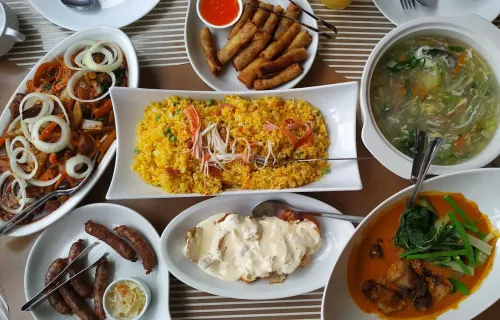
Filipino Food: 12 Essential Dishes (With Tagalog Names)
Filipino food, from adobo to halo-halo: learn the Tagalog names, pronunciations, and ingredients behind 12 dishes you'll want to try on your first trip.

Languages of the Philippines: Tagalog, Cebuano, and More
Languages of the Philippines: one national language (Filipino) plus 180+ regional languages. Here's who speaks what, where, and why it matters to you.