magbugbog
magbugbóg with stress marks
to beat up
From root: bugbog
Conjugations
Past (Completed)
nagbugbog
nag-bug-BOG
beat up
Present (Incomplete)
nagbubugbog
nag-bu-bug-BOG
is beating up
Future (Contemplated)
magbubugbog
mag-bu-bug-BOG
will beat up
Usage Note
Magbugbog is the actor-focus infinitive of bugbog, used for inflicting a sustained beating or physical assault on someone. It appears frequently in crime reporting and carries strong connotations of repeated, forceful violence rather than a single blow. The object-focus counterpart bugbugin places the victim at the center of the action.
Examples
" Huwag kang magbugbog ng tao. "
Natural Translation
Don't beat people up.
Literal Translation
Don't you beat-up of person.
" Magbugbog ka pa ng kalaban, hahabulin ka. "
Natural Translation
If you beat up an enemy again, you'll be chased.
Literal Translation
Beat-up you also of enemy, will-chase you.
" Kahit gaano ka kagalit, hindi tama na magbugbog ka ng kapwa dahil maaari kang makasuhan. "
Natural Translation
No matter how angry you are, it isn't right to beat up another person because you could be charged.
Literal Translation
Even how-much you angry, not right that beat-up you of fellow because possible you be-charged.
Take Tagalog with you
The full course, a 12,500-word dictionary, and flashcards that make every word stick — free to start on iOS and Android.




Tagalog builds thousands of words from a few hundred roots.
How Tagalog words workWord family
bugbog has 1 related form built from the same root.
Related Words
Explore Tagalog by topic
Free guides on grammar, vocabulary, and culture to take you past single-word lookups.
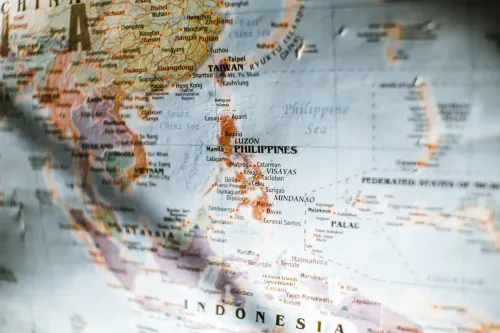
Philippines Geography for Learners: Islands & Language
Philippines geography for Tagalog learners: 7,641 islands, three island groups, and the Southern Luzon heartland where the Tagalog language was born.

Filipino Food: 12 Essential Dishes (With Tagalog Names)
Filipino food, from adobo to halo-halo: learn the Tagalog names, pronunciations, and ingredients behind 12 dishes you'll want to try on your first trip.

Ang, Ng, Sa: The 3 Tagalog Case Markers Explained
Ang, ng, sa are the three Tagalog case markers every noun takes. Learn what each does, the personal forms si/ni/kay, plurals with mga, and clear examples.

Po and Opo in Tagalog: Where to Put Them Right
Po and opo confuse learners — but placement follows one rule. Where po goes in a sentence, why it's opo not 'oo po', and the pronoun shift to learn.