bughaw
búghaw with stress marks
blue
Usage Note
Bughaw is the native Tagalog word for the color blue, particularly a clear sky-blue or azure. It is often used in poetry and literary prose to evoke the sky or the sea. In everyday speech, 'asul' (from Spanish azul) is more commonly heard, while bughaw carries a more lyrical or formal register.
Examples
" Bughaw ang langit. "
Natural Translation
The sky is blue.
Literal Translation
Blue the sky.
" Bughaw ang langit ngayong umaga — maganda ang panahon. "
Natural Translation
The sky is blue this morning — the weather is beautiful.
Literal Translation
Blue the sky this morning — beautiful the weather.
" Habang nakaupo kami sa dalampasigan, pinagmasdan namin ang bughaw na karagatang unti-unting nagiging ginto sa paglubog ng araw. "
Natural Translation
While we sat on the shore, we watched the blue sea slowly turning to gold as the sun set.
Literal Translation
While seated we at-the shore, watched we the blue sea little-by-little becoming gold at sinking of sun.
Take Tagalog with you
The full course, a 12,500-word dictionary, and flashcards that make every word stick — free to start on iOS and Android.




Tagalog builds thousands of words from a few hundred roots.
How Tagalog words workRelated Words
Explore Tagalog by topic
Free guides on grammar, vocabulary, and culture to take you past single-word lookups.
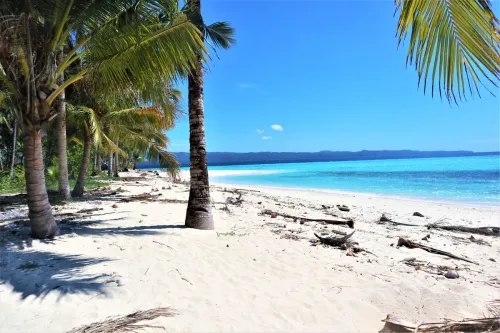
Seasons in the Philippines: A Tagalog Guide
The Philippines has two seasons, not four. Learn tag-araw, tag-ulan, and taglamig, the generative tag- prefix, and the weather vocabulary to match.

Ang, Ng, Sa: The 3 Tagalog Case Markers Explained
Ang, ng, sa are the three Tagalog case markers every noun takes. Learn what each does, the personal forms si/ni/kay, plurals with mga, and clear examples.

Is Tagalog Hard to Learn? An Honest Answer
Tagalog takes around 1,100 hours to reach professional proficiency. Here is what is easy, what is hard, and what to expect at 3, 6, and 12 months.
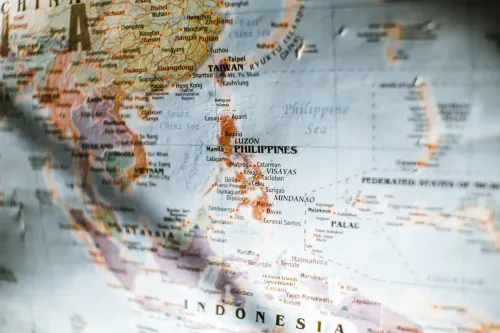
Philippines Geography for Learners: Islands & Language
Philippines geography for Tagalog learners: 7,641 islands, three island groups, and the Southern Luzon heartland where the Tagalog language was born.