dipa
dipâ with stress marks
armspan; fathom; to stretch arms at sides
Usage Note
Dipa is a native Tagalog unit of measurement equal to the full span of an adult's outstretched arms — roughly five to six feet — traditionally used to measure water depth or rope length, similar to a nautical fathom. As a verb, magdipa means to spread both arms wide to their full extent.
Examples
" Dalawang dipa ang lapad ng mesa. "
Natural Translation
The table is two armspans wide.
Literal Translation
Two armspans the width of table.
" Tatlong dipa ang lalim ng balon. "
Natural Translation
The well is three fathoms deep.
Literal Translation
Three armspans the depth of-the well.
" Sinukat ng mangingisda ang lalim ng tubig gamit ang dipa bago siya tumalon mula sa bangka. "
Natural Translation
The fisherman measured the depth of the water using an armspan before he jumped from the boat.
Literal Translation
Measured of the fisherman the depth of water using the armspan before he jumped from the boat.
Take Tagalog with you
The full course, a 12,500-word dictionary, and flashcards that make every word stick — free to start on iOS and Android.




Tagalog builds thousands of words from a few hundred roots.
How Tagalog words workActor Focus Verbs
Related Words
Explore Tagalog by topic
Free guides on grammar, vocabulary, and culture to take you past single-word lookups.

Tagalog Affixes Explained: A Beginner's Guide to Word Building
Tagalog affixes turn one root word into dozens of meanings. Learn prefixes, infixes, suffixes, and circumfixes with clear examples for beginners.

Tagalog Numbers 1-100: Counting, Time & Money Explained
Learn Tagalog numbers 1-100 and beyond. Master both native and Spanish-derived counting systems, plus telling time, reading prices, and ordinals.
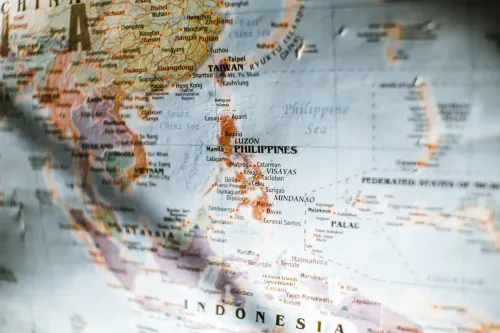
Philippines Geography for Learners: Islands & Language
Philippines geography for Tagalog learners: 7,641 islands, three island groups, and the Southern Luzon heartland where the Tagalog language was born.

How Long Does It Take to Learn Tagalog?
Survival Tagalog takes ~3-4 weeks and comfortable conversation 6-12 months. FSI's 1,100 hours is the professional bar, not the talking-to-family bar.