dyipni
dyípni with stress marks
jeepney
Usage Note
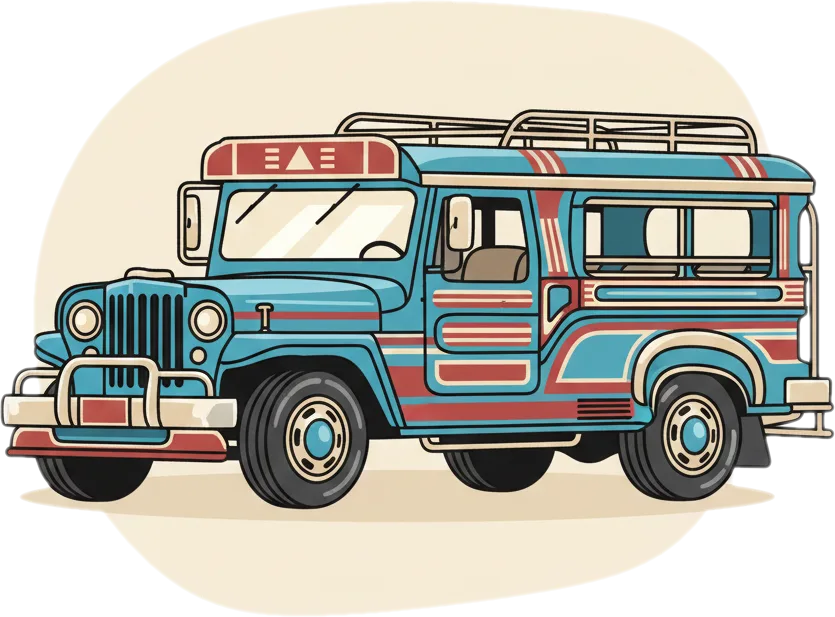
Dyipni is the most iconic form of public transport in the Philippines, known for its vivid painted decorations and open-back bench seating. In daily conversation it is most commonly shortened to dyip, and it evolved from surplus US military jeeps after World War II.
Examples
" Sumakay tayo ng dyipni. "
Natural Translation
Let's ride a jeepney.
Literal Translation
Ride we of jeepney.
" Ang dyipni ay maraming pasahero. "
Natural Translation
The jeepney has many passengers.
Literal Translation
The jeepney has many passengers.
" Mas mura ang pamasahe sa dyipni kaysa sa taksi, kaya marami pa ring umaasa rito tuwing umaga. "
Natural Translation
The fare on a jeepney is cheaper than a taxi, so many people still rely on it every morning.
Literal Translation
More cheap the fare in jeepney than in taxi, so many still relying here every morning.
Take Tagalog with you
The full course, a 12,500-word dictionary, and flashcards that make every word stick — free to start on iOS and Android.




Tagalog builds thousands of words from a few hundred roots.
How Tagalog words workDerived Words
Actor Focus Verbs
Object Focus Verbs
Related Words
Explore Tagalog by topic
Free guides on grammar, vocabulary, and culture to take you past single-word lookups.

Tagalog vs Filipino: What's the Difference & Which to Learn
Tagalog and Filipino aren't the same language — but they overlap almost completely. Here's the real difference and which one you should actually learn.

Po and Opo in Tagalog: Where to Put Them Right
Po and opo confuse learners — but placement follows one rule. Where po goes in a sentence, why it's opo not 'oo po', and the pronoun shift to learn.

Tagalog Time Expressions: Past, Present & Future Guide
Tagalog has no tenses — it uses aspect. Learn time words, days of the week, clock time, and the aspect system, with vocabulary tables and cultural notes.

Tagalog Pronouns Explained: Complete Chart with Examples
Every Tagalog pronoun explained with clear charts: ang/ng/sa forms, tayo vs kami, ikaw vs ka, politeness markers, and the mistakes beginners make.