gasolina
gasolína with stress marks
gasoline
Usage Note
Gasolina comes from Spanish gasolina and is the standard Tagalog term for gasoline used in everyday speech. The rising cost of gasolina is a frequent topic in daily conversation given how central tricycles, jeepneys, and private vehicles are to commuting across the Philippines.
Examples
" Mahal na ang gasolina ngayon. "
Natural Translation
Gasoline is expensive now.
Literal Translation
Expensive already the gasoline now.
" Mababa na ang gasolina ng sasakyan natin. "
Natural Translation
Our vehicle is running low on gasoline.
Literal Translation
Low already the gasoline of-the vehicle ours.
" Tuwing tumataas ang presyo ng gasolina, agad ding tumataas ang pamasahe sa mga jeepney at tricycle. "
Natural Translation
Whenever the price of gasoline goes up, the fare on jeepneys and tricycles immediately goes up too.
Literal Translation
Every-time rises the price of gasoline, immediately also rises the fare on the jeepney and tricycle.
Take Tagalog with you
The full course, a 12,500-word dictionary, and flashcards that make every word stick — free to start on iOS and Android.




Tagalog builds thousands of words from a few hundred roots.
How Tagalog words workRelated Words
Explore Tagalog by topic
Free guides on grammar, vocabulary, and culture to take you past single-word lookups.

Po and Opo in Tagalog: Where to Put Them Right
Po and opo confuse learners — but placement follows one rule. Where po goes in a sentence, why it's opo not 'oo po', and the pronoun shift to learn.

Tagalog Word Order: Sentence Structure Made Simple
Why Tagalog puts the verb first, and how ang, ng, and sa markers work. A clear guide to VSO word order, forming questions, and negation.
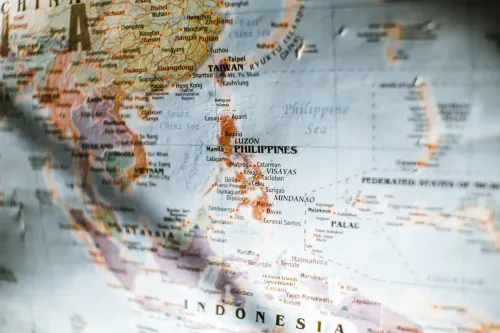
Philippines Geography for Learners: Islands & Language
Philippines geography for Tagalog learners: 7,641 islands, three island groups, and the Southern Luzon heartland where the Tagalog language was born.

Ng vs Nang in Tagalog: The Spelling Rule
Ng vs nang sound identical but spell differently. Use ng to mark nouns (of, the object), and nang for how, when, repetition, and counting time.