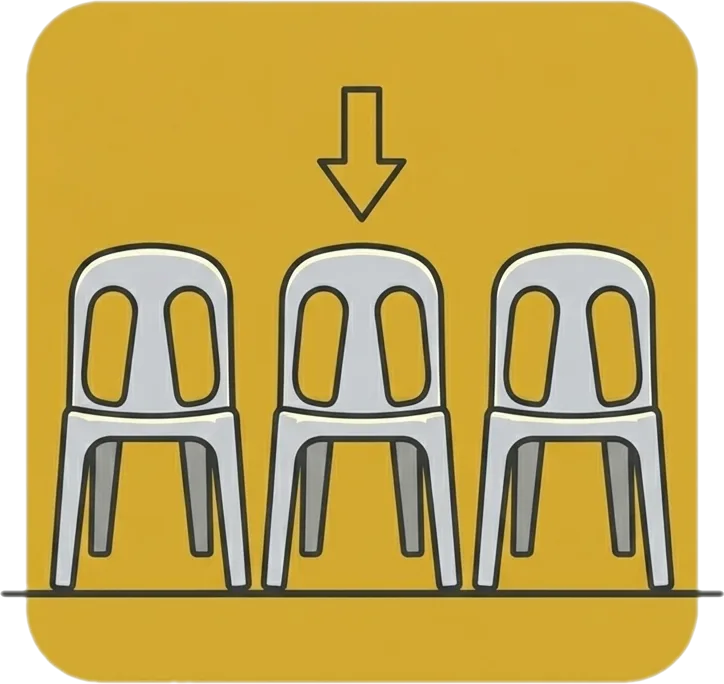
From root: gitna
Conjugations
Past (Completed)
pumagitna
pu-ma-git-NA
stepped into the middle
Present (Incomplete)
pumapagitna
pu-ma-pa-git-NA
stepping into the middle
Future (Contemplated)
papagitna
pa-pa-git-NA
will step into the middle
Usage Note
Pumagitna is used when someone physically moves to the center of a space or metaphorically intervenes in a situation or conflict to mediate. It often implies taking a central role or position to gain attention or resolve an issue.
Examples
" Pumagitna ka sa larawan. "
Natural Translation
Step into the middle for the picture.
Literal Translation
Step-into-middle you at picture.
" Sinubukan niyang pumagitna sa nag-aaway. "
Natural Translation
He tried to step into the middle of those fighting.
Literal Translation
Tried he step-into-middle at fighting.
" Nang lumala na ang pagtatalo ng dalawa, mabilis na pumagitna ang guro upang sila ay payapain bago pa magkagulo. "
Natural Translation
When the argument between the two worsened, the teacher quickly stepped into the middle to calm them down before any trouble could break out.
Literal Translation
When worsened already the argument of two, quick stepped-into-middle the teacher to them calm before yet break-into-chaos.
Take Tagalog with you
The full course, a 12,500-word dictionary, and flashcards that make every word stick — free to start on iOS and Android.




Tagalog builds thousands of words from a few hundred roots.
How Tagalog words workWord family
gitna has 7 related forms built from the same root.
Related Words
Explore Tagalog by topic
Free guides on grammar, vocabulary, and culture to take you past single-word lookups.

Languages of the Philippines: Tagalog, Cebuano, and More
Languages of the Philippines: one national language (Filipino) plus 180+ regional languages. Here's who speaks what, where, and why it matters to you.

Mano Po and Filipino Etiquette: A Visitor's Guide
Mano po presses an elder's hand to your forehead as a blessing. Learn who to mano, how to lip-point, and the etiquette that wins over a Filipino family.

Tagalog Verb Focus System Explained (It's Not Active vs. Passive)
The Tagalog verb focus system isn't active vs. passive. Learn actor focus, object focus, and more with clear examples that finally make it click.

Tagalog Time Expressions: Past, Present & Future Guide
Tagalog has no tenses — it uses aspect. Learn time words, days of the week, clock time, and the aspect system, with vocabulary tables and cultural notes.