gulpihin
gulpihín with stress marks
to beat up [someone]
From root: gulpe
Conjugations
Past (Completed)
ginulpe
gi-NUL-pe
beat up
Present (Incomplete)
ginugulpe
gi-nu-GUL-pe
is being beaten up
Future (Contemplated)
gugulpihin
gu-gul-pi-HIN
will be beaten up
Usage Note
Gulpihin is the object-focus form of gulpe, a Spanish loanword from golpe meaning a blow. It carries an unambiguously physical and blunt connotation — a beating rather than a slap — and is more forceful in register than hampasin, typically implying multiple strikes. It frequently appears in crime reportage and street-language contexts.
Examples
" Huwag mong gulpihin ang aso. "
Natural Translation
Don't beat up the dog.
Literal Translation
Do not you to beat up the dog.
" Takot sila na gulpihin ng mga kaaway. "
Natural Translation
They are afraid of being beaten up by enemies.
Literal Translation
Afraid they to beat up by enemy.
" Ipinasok sa kulungan ang mga lalaki matapos nilang gulpihin ang isang biktima na walang kalaban-laban sa madilim na eskinita. "
Natural Translation
The men were put in jail after they beat up a defenseless victim in a dark alley.
Literal Translation
Were put in jail the plural man after they to beat up the one victim that none defense in dark alley.
Take Tagalog with you
The full course, a 12,500-word dictionary, and flashcards that make every word stick — free to start on iOS and Android.




Tagalog builds thousands of words from a few hundred roots.
How Tagalog words workWord family
gulpe has 1 related form built from the same root.
Related Words
Explore Tagalog by topic
Free guides on grammar, vocabulary, and culture to take you past single-word lookups.
Tagalog Question Words: Ano, Sino, Saan & More
Tagalog question words like ano, sino, and saan need the right frame to work. Learn the ang-vs-pronoun rule, confusable pairs, and the ba particle with audio.
Philippines Geography for Learners: Islands & Language
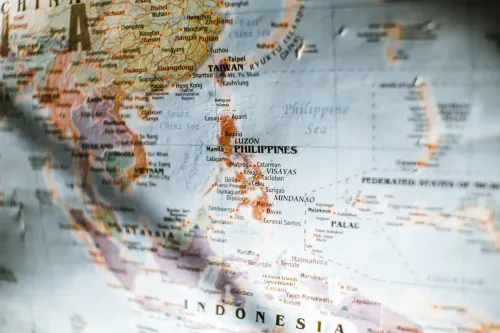
Philippines geography for Tagalog learners: 7,641 islands, three island groups, and the Southern Luzon heartland where the Tagalog language was born.

Philippine Christmas Traditions: World's Longest Holiday
Philippine Christmas traditions run four months — from Ber-month carols to Simbang Gabi dawn masses, Noche Buena feasts, and parol lanterns lighting every street.

Tagalog Verb Focus System Explained (It's Not Active vs. Passive)
The Tagalog verb focus system isn't active vs. passive. Learn actor focus, object focus, and more with clear examples that finally make it click.