Philippine Christmas Traditions: World's Longest Holiday
May 11, 2026 • Jun Alldred • 6 minute read
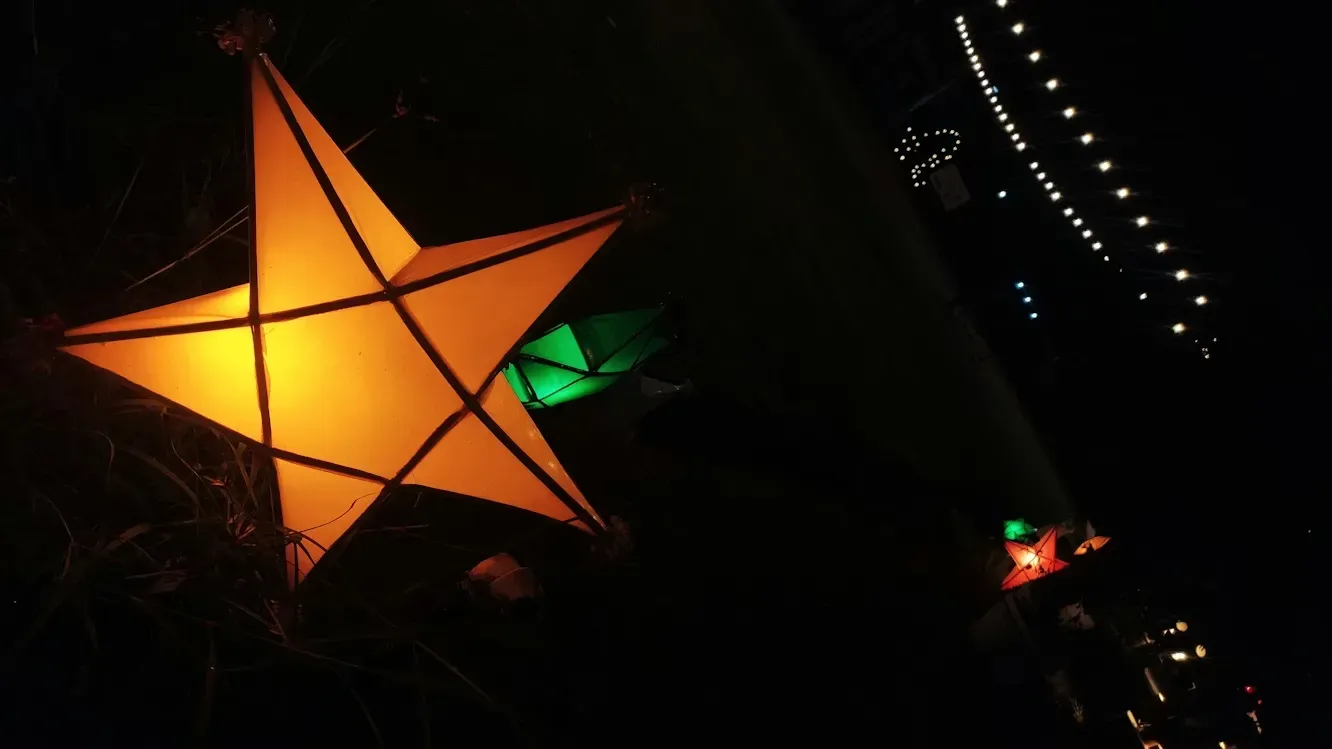
Table of Contents
- Why Christmas Starts in September: The Ber Months
- Simbang Gabi: The Nine Dawn Masses
- The Parol: Star Lantern of Bethlehem
- Noche Buena: The Midnight Feast
- Christmas Parties
- Gift Giving: Kris Kringle and Aguinaldo
- The Giant Lantern Festival
- Pasko Greetings and the End of the Season
- What to Take From All of This
If you land in Manila on the first of September, you will already hear Christmas carols in the supermarket. Jose Mari Chan’s “Christmas in Our Hearts” will be on the radio by lunchtime. Filipinos call these the Ber months — September, October, November, December — the unofficial opening of Pasko, the Filipino Christmas season. Four months later, on the first Sunday of January, the lights finally come down.
Why Christmas Starts in September: The Ber Months
No other Catholic country stretches the calendar quite this far. The official 100-day countdown begins on September 16, but by then the season is well underway. There is a practical reason for the long runway: Overseas Filipino Workers need months to book flights, ship balikbayan boxes, and save for the feast.
Simbang Gabi: The Nine Dawn Masses
The liturgical heart of Filipino Christmas is Simbang Gabi, a novena of nine consecutive masses from December 16 through the 24th. Most parishes start between 4:00 and 5:00 a.m. The tradition formally began in 1669, when Spanish friars in the Philippines received permission to move the Advent novena before sunrise as a concession for farmers who needed to be in the fields by daybreak. Folk belief promises that if you complete all nine dawn masses sincerely, one wish will be granted.
The liturgically correct Latin name is Misa de Aguinaldo, “gift mass.” You will more often hear it called Misa de Gallo, “rooster’s mass” — the popular vernacular. Many parishes now also offer anticipated masses at 8:00 p.m. for those who cannot make the pre-dawn simba.
The Parol: Star Lantern of Bethlehem
The parol — from the Spanish farol, “lantern” — is the visual signature of a Filipino Christmas. The classic shape is a five-pointed star with two streaming tails, originally built from bamboo and Japanese paper and lit by a coconut-oil lamp. Today the bigger ones use capiz shell and LEDs. The parol symbolises the Star of Bethlehem and historically guided worshippers walking to Simbang Gabi in the dark. Every home, jeepney, and lamppost gets one; in the diaspora it has become a portable emblem of Filipino identity.
Take Tagalog with you
The full course, a 12,500-word dictionary, and flashcards that make every word stick — free to start on iOS and Android.




Noche Buena: The Midnight Feast
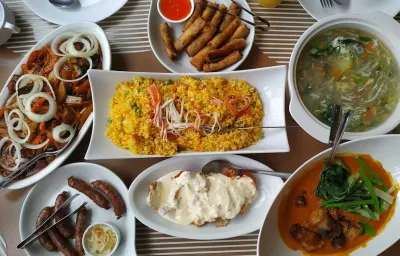
After Christmas Eve mass, families gather at midnight for Noche Buena, “good night” in Spanish. The table is a small history lesson: something Spanish, something Chinese, something American, something unmistakably Filipino. Lechon (whole roast pig) and hamon (pineapple-glazed ham) anchor the spread; queso de bola, a red-waxed ball of Edam, sits beside pansit noodles for long life and lumpiang Shanghai spring rolls. See our guide to the full Noche Buena spread for the recipes worth trying.
Christmas Parties
Filipinos line up Christmas parties through December — the Christmas party (the English loanword is universal) covers everything from office gatherings to barangay-wide events. Workplaces hold themed parties with a buffet, raffle prizes, dance numbers, and a program of games. Schools, churches, and friend groups run their own version of the same.
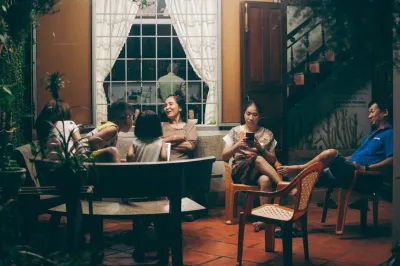
The biggest is the family reunion, often held on Christmas Day or in the days between Christmas and New Year, when balikbayan relatives flying in from abroad are home. Extended families pack into a lola’s house with a long table of pansit, lechon, and lumpia, and karaoke runs late into the night.
Gift Giving: Kris Kringle and Aguinaldo
Filipino Christmas runs on two parallel gift-giving customs: Kris Kringle among peers, and aguinaldo from godparents to godchildren.
Kris Kringle, also called Monito Monita, is the Filipino take on Secret Santa. Names are drawn at the start of December — your monito (boy) or monita (girl) becomes your secret recipient. The defining twist is the theme weeks: small gifts dictated by alliterative themes — “Something Sweet,” “Something Sharp,” “Something Soft” — building up to the big reveal at the year-end party. Offices, schools, and friend groups all run their own.
Christmas Day belongs to pamamasko — children visit their godparents to receive the aguinaldo, the Christmas gift, usually cash. Children perform mano po first, pressing the elder’s hand to their forehead, before accepting the regalo. The respect ritual is worth learning before you go: see our guide to common Tagalog greetings for how po and opo work.
Godparents matter here in a way they often do not in Western Christianity. A Filipino child may have a dozen pairs of ninong and ninang, and the role is lifelong — moral sponsor, second parent, occasional tuition lifeline. Modern Filipino writers have pushed back on reducing them to aguinaldo-dispensers; the deeper meaning is sponsorship, not payout. For the fuller picture, see our guide to Filipino family words.
The Giant Lantern Festival
The most spectacular regional tradition belongs to Pampanga. The Giant Lantern Festival — Ligligan Parul in Kapampangan — began in 1904 in the neighbouring town of Bacolor as part of the lubenas novena procession. It moved to San Fernando later, and in 1931 the lanterns were first wired for electricity; that is usually cited as the birth of the modern festival. Competing barangays now build lanterns up to six metres across, thousands of bulbs synchronised to carols.
Pasko Greetings and the End of the Season
| Tagalog | English | When to Use |
|---|---|---|
| Maligayang Pasko | Merry Christmas | All through December |
| Manigong Bagong Taon | Prosperous New Year | Pair with Maligayang Pasko |
| Pasko | Christmas | The whole season |
| Simbang Gabi | Night Worship / dawn mass novena | Dec 16–24 |
| Noche Buena | Christmas Eve feast | Midnight of Dec 24 |
| Bisperas ng Pasko | Christmas Eve | The day of Dec 24 |
| parol | Star lantern | Hangs on every home |
| aguinaldo | Christmas gift, usually cash | From godparents |
| Monito Monita | Filipino Secret Santa | Office and school gift exchange |
| balikbayan | Filipino returning home | Most arrive for Christmas |
| pamamasko | Christmas visiting | Dec 25 calls on godparents |
| ninong | Godfather | Lifelong role |
| ninang | Godmother | Lifelong role |
| mano po | Respect gesture to an elder | Before receiving aguinaldo |
| bibingka | Rice cake with salted egg | Sold outside Simbang Gabi |
| puto bumbong | Violet rice in bamboo tubes | Sold outside Simbang Gabi |
| Belen | Nativity scene | From Spanish for Bethlehem |
The season does not end at New Year. It closes on the first Sunday after January 1, when the country marks Araw ng Tatlong Hari, Three Kings’ Day. Since Vatican II the feast has shifted from January 6 to that first Sunday, and it now carries a second name: Pasko ng Matatanda, the Christmas of the Elderly. The old folks take the final round of greetings. Then the lights come down.
What to Take From All of This
Filipino Christmas is longer, louder, more religious, and more communal than almost any other version on earth — and at its best, unbelievably generous. If you find yourself in the Philippines in December, accept every invitation to Noche Buena. Stand in the back at a 4 a.m. Simbang Gabi and stay for the bibingka. Buy a parol before you fly home. And when someone smiles at you on the street in the Ber months, try the phrase back: Maligayang Pasko!
Pasko knowledge check
5 quick questions to see what stuck.
-
How many consecutive dawn masses make up the Simbang Gabi novena?
Simbang Gabi runs from December 16 through the 24th — nine consecutive masses.
-
The parol is a star-shaped lantern that symbolises the Star of Bethlehem.
The five-pointed parol was originally built from bamboo and paper to guide worshippers walking to Simbang Gabi in the dark.
-
What is Noche Buena?
Noche Buena — 'good night' in Spanish — is the family feast eaten at midnight after Christmas Eve mass.
-
Match each Tagalog Christmas word to its meaning.
Tap a Tagalog word, then its English meaning to pair them.
Tagalog
English
These are the core vocabulary of Philippine Christmas — all taught in the article's phrase table.
-
The Filipino Christmas greeting for 'Merry Christmas' is: '___ Pasko!'
Maligayang Pasko — literally 'joyful Christmas' — is the standard Filipino Christmas greeting.
Words in this article
Look up any term for pronunciation, stress marks, and example sentences in the dictionary.
Related Articles

Take Tagalog with you
The full course, a 12,500-word dictionary, and flashcards that make every word stick — free to start on iOS and Android.