
From root: hangin
Conjugations
Past (Completed)
hinanginan
hi-na-NGI-nan
aired out
Present (Incomplete)
hinahanginan
hi-na-ha-NGI-nan
airing out
Future (Contemplated)
hahanginan
ha-ha-NGI-nan
will air out
Usage Note
Hanginan is used when you want to expose an object, a room, or even a person to a breeze to freshen things up or cool them down. It is commonly applied to household tasks like airing out damp laundry or letting fresh air circulate through a stuffy room.
Examples
" Hanginan mo ang kuwarto. "
Natural Translation
Air out the room.
Literal Translation
Air-out you the room.
" Kailangan mong hanginan ang damit. "
Natural Translation
You need to air out the clothes.
Literal Translation
Need you air-out the clothes.
" Buksan mo ang mga bintana at hanginan natin ang sala habang maaraw pa ngayong umaga. "
Natural Translation
Open the windows and let's air out the living room while it's still sunny this morning.
Literal Translation
Open you the plural window and air-out we the living-room while sunny still this morning.
Take Tagalog with you
The full course, a 12,500-word dictionary, and flashcards that make every word stick — free to start on iOS and Android.




Tagalog builds thousands of words from a few hundred roots.
How Tagalog words workWord family
hangin has 6 related forms built from the same root.
Related Words
Explore Tagalog by topic
Free guides on grammar, vocabulary, and culture to take you past single-word lookups.
Po and Opo in Tagalog: Where to Put Them Right
Po and opo confuse learners — but placement follows one rule. Where po goes in a sentence, why it's opo not 'oo po', and the pronoun shift to learn.
May vs Mayroon vs Meron: Have & There Is
May vs mayroon in Tagalog finally made simple: one rule decides which to use, plus how meron and wala fit the same have and there-is family.

Tagalog Affixes Explained: A Beginner's Guide to Word Building
Tagalog affixes turn one root word into dozens of meanings. Learn prefixes, infixes, suffixes, and circumfixes with clear examples for beginners.
Philippines Geography for Learners: Islands & Language
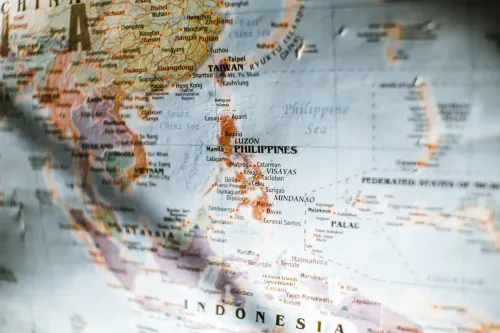
Philippines geography for Tagalog learners: 7,641 islands, three island groups, and the Southern Luzon heartland where the Tagalog language was born.