hiram
hirám with stress marks
borrowing; loan
Usage Note
Hiram refers to the act of borrowing or something borrowed, commonly used with the affixes -um- (humiram) to mean 'to borrow' and ipa- (ipahiram) for 'to lend.' It is used frequently in daily life for items or money and emphasizes the social expectation that the borrowed item will be returned.
Examples
" Ibalik mo ang hiram na libro. "
Natural Translation
Return the borrowed book.
Literal Translation
Return you the borrowed [linker] book.
" Malaki ang kaniyang hiram na pera. "
Natural Translation
His/Her borrowed money is a large amount.
Literal Translation
Big the his/her borrowed [linker] money.
" Madali siyang nagtitiwala dahil hindi pa naman nahuli sa hindi pagbabalik ng anumang hiram. "
Natural Translation
She trusts easily because she has never been caught failing to return anything she borrowed.
Literal Translation
Easy she-[linker] trusting because not yet really caught in not returning of any borrowed.
Take Tagalog with you
The full course, a 12,500-word dictionary, and flashcards that make every word stick — free to start on iOS and Android.




Tagalog builds thousands of words from a few hundred roots.
How Tagalog words workDerived Words
Actor Focus Verbs
Object Focus Verbs
Related Words
Explore Tagalog by topic
Free guides on grammar, vocabulary, and culture to take you past single-word lookups.

Magkano: How to Ask "How Much" in Tagalog
Magkano means how much in Tagalog. Learn to ask a price, tell it apart from ilan and gaano, sound polite with po, and haggle at the palengke.
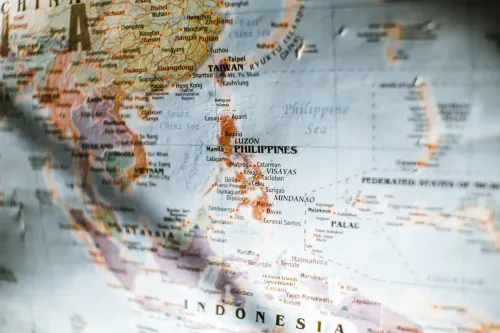
Philippines Geography for Learners: Islands & Language
Philippines geography for Tagalog learners: 7,641 islands, three island groups, and the Southern Luzon heartland where the Tagalog language was born.

Tagalog Slang Guide: 20 Words You'll Hear on TikTok
Tagalog slang explained: lodi, petmalu, werpa, astig, chika and more. Decode Filipino TikTok comments, group chats, and pop culture with this practical guide.

Tagalog Pronouns Explained: Complete Chart with Examples
Every Tagalog pronoun explained with clear charts: ang/ng/sa forms, tayo vs kami, ikaw vs ka, politeness markers, and the mistakes beginners make.