humubog
humúbog with stress marks
to shape
From root: hubog
Conjugations
Past (Completed)
humubog
hu-MU-bog
shaped
Present (Incomplete)
humuhubog
hu-mu-HU-bog
is shaping
Future (Contemplated)
huhubog
hu-HU-bog
will shape
Usage Note
Humubog is the actor-focus infinitive of hubog, applying to molding clay, shaping dough, or any process of giving form to a pliable material with the shaper as the focus. It is widely used figuratively for forming character, habits, or values — paghubog ng kabataan is a common phrase in educational and civic discourse.
Examples
" Mahirap humubog ng putik. "
Natural Translation
It is hard to shape clay.
Literal Translation
Hard to-shape of clay.
" Mahirap humubog ng katawan nang walang sapat na ehersisyo. "
Natural Translation
It is hard to shape one's body without enough exercise.
Literal Translation
Hard to shape of body without enough exercise.
" Tungkulin ng bawat magulang na humubog sa kanilang mga anak upang maging responsable at maunawain. "
Natural Translation
It is every parent's duty to shape their children into responsible and understanding people.
Literal Translation
Duty of every parent to shape to their children to become responsible and understanding.
Take Tagalog with you
The full course, a 12,500-word dictionary, and flashcards that make every word stick — free to start on iOS and Android.




Tagalog builds thousands of words from a few hundred roots.
How Tagalog words workWord family
hubog has 1 related form built from the same root.
Related Words
Explore Tagalog by topic
Free guides on grammar, vocabulary, and culture to take you past single-word lookups.
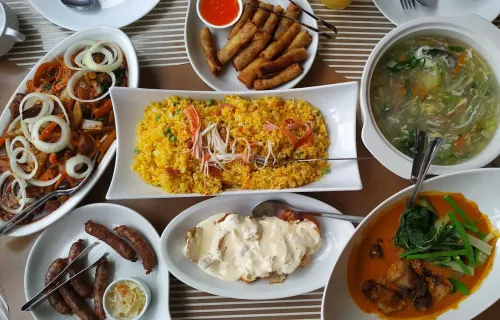
Filipino Food: 12 Essential Dishes (With Tagalog Names)
Filipino food, from adobo to halo-halo: learn the Tagalog names, pronunciations, and ingredients behind 12 dishes you'll want to try on your first trip.

Tagalog Pronouns Explained: Complete Chart with Examples
Every Tagalog pronoun explained with clear charts: ang/ng/sa forms, tayo vs kami, ikaw vs ka, politeness markers, and the mistakes beginners make.

Tagalog Greetings: How to Say Hello, Goodbye & Po/Opo
Master Tagalog greetings with pronunciation: kumusta, magandang umaga, po and opo polite forms, time-of-day phrases, and the mano po tradition.
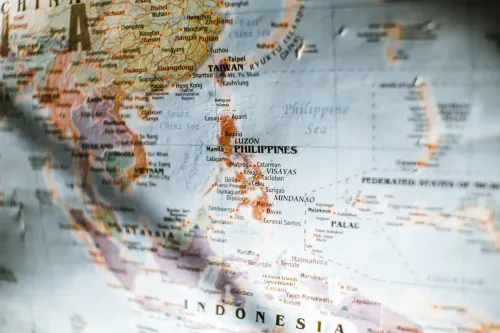
Philippines Geography for Learners: Islands & Language
Philippines geography for Tagalog learners: 7,641 islands, three island groups, and the Southern Luzon heartland where the Tagalog language was born.