hukbong-katihan
hukbóng-katihán with stress marks
army (land soldiers)
Usage Note
Hukbong-katihan is the formal Filipino term for the ground or land army, distinguishing it from naval and air forces. Katihan derives from kati, relating to land or dry terrain. This compound is primarily used in formal, civic, and governmental contexts rather than everyday conversation.
Examples
" Malakas ang ating hukbong-katihan. "
Natural Translation
Our army is strong.
Literal Translation
Strong the our land-army.
" Ang hukbong-katihan ang nagpanatili ng kapayapaan sa hangganan. "
Natural Translation
The army maintained peace at the border.
Literal Translation
The land-army the maintained the peace at-the border.
" Nagpadala ang gobyerno ng hukbong-katihan sa lalawigan upang tumulong sa mga nasalanta ng matinding baha. "
Natural Translation
The government sent the army to the province to help those devastated by the severe flooding.
Literal Translation
Sent the government of land-army to province so-that help to plural devastated by severe flood.
Take Tagalog with you
The full course, a 12,500-word dictionary, and flashcards that make every word stick — free to start on iOS and Android.




Tagalog builds thousands of words from a few hundred roots.
How Tagalog words workRelated Words
Explore Tagalog by topic
Free guides on grammar, vocabulary, and culture to take you past single-word lookups.

Tagalog Greetings: How to Say Hello, Goodbye & Po/Opo
Master Tagalog greetings with pronunciation: kumusta, magandang umaga, po and opo polite forms, time-of-day phrases, and the mano po tradition.
May vs Mayroon vs Meron: Have & There Is
May vs mayroon in Tagalog finally made simple: one rule decides which to use, plus how meron and wala fit the same have and there-is family.

Tagalog Verb Conjugation: Aspects Made Simple
Tagalog verb conjugation uses aspects, not tenses. Learn the three aspects with -um- and mag- verbs, one reduplication rule, and clear example tables.
Philippines Geography for Learners: Islands & Language
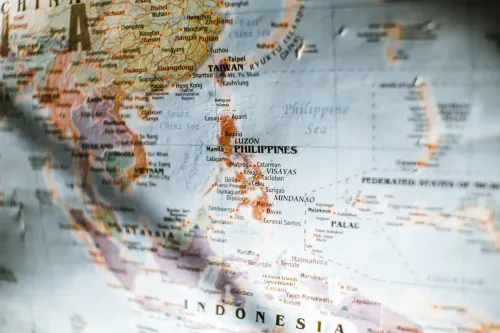
Philippines geography for Tagalog learners: 7,641 islands, three island groups, and the Southern Luzon heartland where the Tagalog language was born.