isip-bata
childish or immature
From root: isip
Usage Note
Isip-bata is a compound word used to describe adults whose behavior or logic resembles that of a child.
Examples
" Isip-bata pa rin siya. "
Natural Translation
He is still childish.
Literal Translation
Childish still he.
" Huwag kang maging isip-bata. "
Natural Translation
Don't be childish.
Literal Translation
Don't you be childish.
" Kahit matanda na siya, isip-bata pa rin siyang umasta kaya madalas siyang pinapagalitan ng kaniyang asawa. "
Natural Translation
Even though he is already old, he still acts childish, so his wife often scolds him.
Literal Translation
Even-though old already he, childish still he to-act so often he scolded by his spouse.
Take Tagalog with you
The full course, a 12,500-word dictionary, and flashcards that make every word stick — free to start on iOS and Android.




Tagalog builds thousands of words from a few hundred roots.
How Tagalog words workWord family
isip has 8 related forms built from the same root.
Related Words
Explore Tagalog by topic
Free guides on grammar, vocabulary, and culture to take you past single-word lookups.
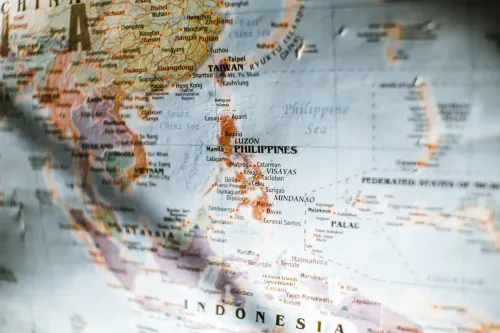
Philippines Geography for Learners: Islands & Language
Philippines geography for Tagalog learners: 7,641 islands, three island groups, and the Southern Luzon heartland where the Tagalog language was born.

Tagalog Verb Focus System Explained (It's Not Active vs. Passive)
The Tagalog verb focus system isn't active vs. passive. Learn actor focus, object focus, and more with clear examples that finally make it click.
May vs Mayroon vs Meron: Have & There Is
May vs mayroon in Tagalog finally made simple: one rule decides which to use, plus how meron and wala fit the same have and there-is family.

Ng vs Nang in Tagalog: The Spelling Rule
Ng vs nang sound identical but spell differently. Use ng to mark nouns (of, the object), and nang for how, when, repetition, and counting time.