pagkakalabaw
state of being a carabao

From root: kalabaw
Usage Note
Pagkakalabaw refers to the inherent nature or physical identity of being a water buffalo. It is often used in descriptive or literary contexts to contrast animal nature with human nature.
Examples
" Kapansin-pansin ang pagkakalabaw ng hayop na ito. "
Natural Translation
The carabao nature of this animal is noticeable.
Literal Translation
Noticeable the state-of-being-carabao of animal this.
" Nakita namin ang tunay na pagkakalabaw sa kaniyang lakas. "
Natural Translation
We saw the true nature of being a carabao in its strength.
Literal Translation
Saw we the true state-of-being-carabao at its strength.
" Kung minsan, mas pinapahalagahan natin ang pagkakalabaw ng tao na tapat at masipag kaysa sa matalino ngunit tamad. "
Natural Translation
Sometimes, we value more the carabao-like quality of a person who is loyal and hardworking than someone clever but lazy.
Literal Translation
If sometimes, more value we the state-of-being-carabao of person who loyal and hardworking than the smart but lazy.
Take Tagalog with you
The full course, a 12,500-word dictionary, and flashcards that make every word stick — free to start on iOS and Android.




Tagalog builds thousands of words from a few hundred roots.
How Tagalog words workWord family
kalabaw has 3 related forms built from the same root.
Related Words
Explore Tagalog by topic
Free guides on grammar, vocabulary, and culture to take you past single-word lookups.
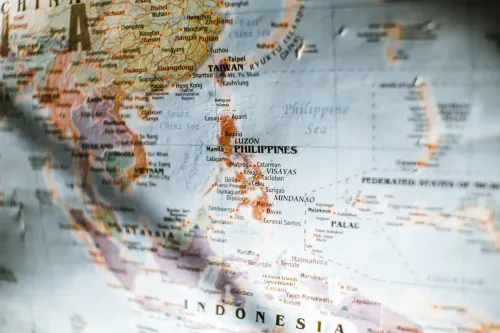
Philippines Geography for Learners: Islands & Language
Philippines geography for Tagalog learners: 7,641 islands, three island groups, and the Southern Luzon heartland where the Tagalog language was born.

Ng vs Nang in Tagalog: The Spelling Rule
Ng vs nang sound identical but spell differently. Use ng to mark nouns (of, the object), and nang for how, when, repetition, and counting time.

Na vs -ng in Tagalog: The Linker Rule Made Simple
When do you use na vs -ng in Tagalog? One simple rule, with clear examples, memory tips, and common mistakes explained for English-speaking beginners.

Days of the Week and Months in Tagalog
The days of the week and months in Tagalog are Spanish loanwords. Learn all 7 days and 12 months with pronunciation, plus how to say dates and 'every Monday.'