magkalesa
to ride a horse-drawn carriage
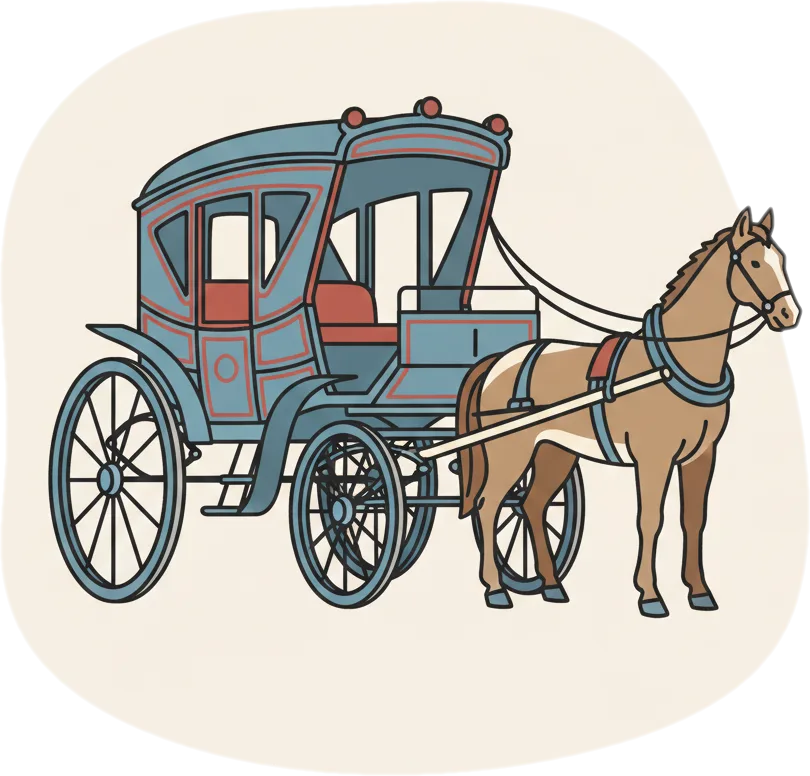
From root: kalesa
Conjugations
Past (Completed)
nagkalesa
nag-ka-LE-sa
rode a horse-drawn carriage
Present (Incomplete)
nagkakalesa
nag-ka-ka-LE-sa
riding a horse-drawn carriage
Future (Contemplated)
magkakalesa
mag-ka-ka-LE-sa
will ride a horse-drawn carriage
Usage Note
Magkalesa is used when one chooses to ride a horse-drawn carriage, which is primarily found today in historical districts or tourist spots like Intramuros. It typically suggests a leisurely or ceremonial journey rather than a common mode of daily transportation.
Examples
" Magkalesa tayo sa Intramuros. "
Natural Translation
Let's ride a horse-drawn carriage in Intramuros.
Literal Translation
Ride-kalesa we in Intramuros.
" Subukan nating magkalesa sa Intramuros. "
Natural Translation
Let's try riding a horse-drawn carriage in Intramuros.
Literal Translation
Try we to-ride-kalesa in Intramuros.
" Tuwing bumibisita ang mga turista sa lumang siyudad, gusto nilang magkalesa upang madama ang ganda ng kasaysayan ng lugar. "
Natural Translation
Whenever tourists visit the old city, they like to ride a horse-drawn carriage to feel the beauty of the place's history.
Literal Translation
Every visit the tourists to old city, like they to-ride-kalesa so to-feel the beauty of history of place.
Take Tagalog with you
The full course, a 12,500-word dictionary, and flashcards that make every word stick — free to start on iOS and Android.




Tagalog builds thousands of words from a few hundred roots.
How Tagalog words workWord family
kalesa has 2 related forms built from the same root.
Related Words
Explore Tagalog by topic
Free guides on grammar, vocabulary, and culture to take you past single-word lookups.
May vs Mayroon vs Meron: Have & There Is
May vs mayroon in Tagalog finally made simple: one rule decides which to use, plus how meron and wala fit the same have and there-is family.

Tagalog Slang Guide: 20 Words You'll Hear on TikTok
Tagalog slang explained: lodi, petmalu, werpa, astig, chika and more. Decode Filipino TikTok comments, group chats, and pop culture with this practical guide.

Spaced Repetition for Tagalog: How Flashcards Make Words Stick
Cramming Tagalog vocabulary fails. See how spaced repetition — the science behind smart flashcards — makes words stick for the long term.

Filipino Family Words and Honorifics: Ate, Kuya & Tita
Filipino family words like ate, kuya, tita, tito, lolo, and lola go far beyond family — learn how Filipinos use them with strangers, plus mano po etiquette.