From root: kilala
Conjugations
Past (Completed)
nakilala
na-ki-LA-la
met someone
Present (Incomplete)
nakikilala
na-ki-ki-LA-la
meeting someone
Future (Contemplated)
makikilala
ma-ki-ki-LA-la
will meet someone
Usage Note
Makilala is used when meeting someone for the first time or recognizing someone you previously knew. It is commonly used in social introductions or when describing the act of getting to know another person.
Examples
" Masaya akong makilala kayo. "
Natural Translation
I'm happy to meet you all.
Literal Translation
Happy I to-meet you-all.
" Masaya akong makilala ka. "
Natural Translation
I am happy to meet you.
Literal Translation
Happy I to meet you.
" Hindi ko inaasahang makilala ang dati kong kaibigan sa eroplano matapos ang sampung taon na hindi kami nagkita. "
Natural Translation
I didn't expect to meet my old friend on the plane after ten years of not seeing each other.
Literal Translation
Not I expecting to-meet the former my friend on plane after the ten year that not we saw-each-other.
Take Tagalog with you
The full course, a 12,500-word dictionary, and flashcards that make every word stick — free to start on iOS and Android.




Tagalog builds thousands of words from a few hundred roots.
How Tagalog words workWord family
kilala has 9 related forms built from the same root.
Related Words
Explore Tagalog by topic
Free guides on grammar, vocabulary, and culture to take you past single-word lookups.
Seasons in the Philippines: A Tagalog Guide
The Philippines has two seasons, not four. Learn tag-araw, tag-ulan, and taglamig, the generative tag- prefix, and the weather vocabulary to match.
Tagalog Question Words: Ano, Sino, Saan & More
Tagalog question words like ano, sino, and saan need the right frame to work. Learn the ang-vs-pronoun rule, confusable pairs, and the ba particle with audio.

Tagalog Slang Guide: 20 Words You'll Hear on TikTok
Tagalog slang explained: lodi, petmalu, werpa, astig, chika and more. Decode Filipino TikTok comments, group chats, and pop culture with this practical guide.
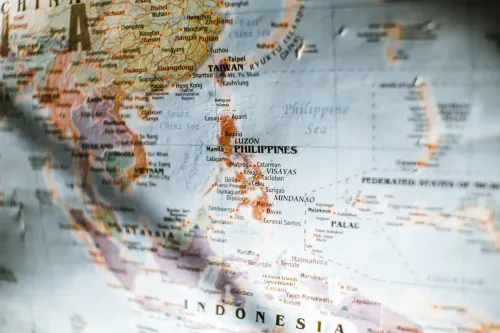
Philippines Geography for Learners: Islands & Language
Philippines geography for Tagalog learners: 7,641 islands, three island groups, and the Southern Luzon heartland where the Tagalog language was born.